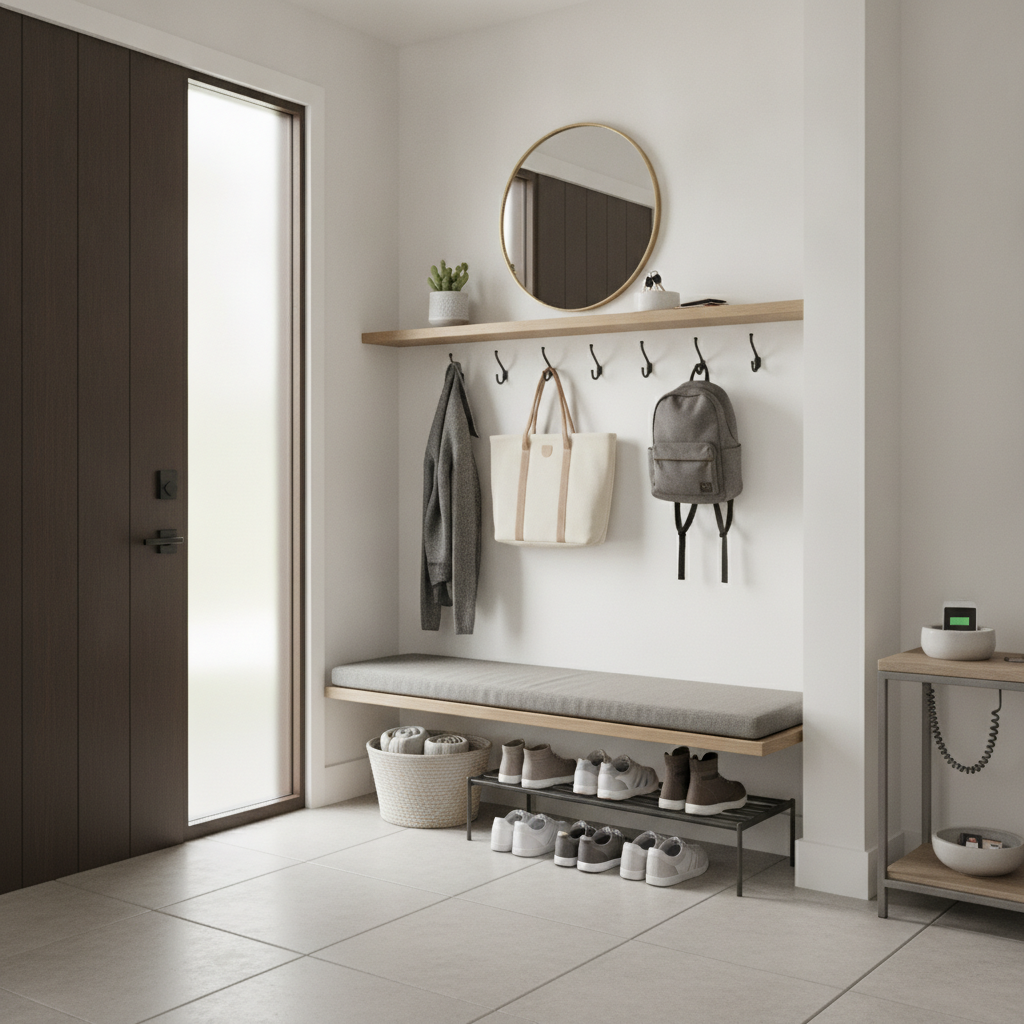
Walking through your front door should feel like a breath of fresh air — but for most people, it feels like running a gauntlet. Keys land wherever there's space. Bags pile up on chairs. Mail accumulates in ambiguous stacks. Shoes multiply near the entrance until someone trips over them. The problem isn't a lack of willpower or tidiness; it's a lack of structure. Without a designated transition zone — a small, intentional area near your entrance that absorbs the chaos of arriving and departing — your entire home absorbs that chaos instead.
A transition zone is essentially a functional buffer between the outside world and your living space. It's the physical and psychological airlock that lets you shed the day before you carry it any further inside. Designing one well doesn't require a renovation or a large entryway. Even a narrow hallway can hold a surprisingly effective system. The following strategies will help you build one that actually works for your home and your habits.
Define the Boundaries of Your Entry Space
Before adding anything, get clear on what space you're actually working with. Measure the area within roughly six feet of your front door and take note of what's already there — furniture, outlets, lighting, wall space. This kind of audit prevents the common mistake of buying organizers that don't fit or clutter the space further. A transition zone in a Pottery Barn-style mudroom looks very different from one squeezed into a Brooklyn apartment hallway, and both can work beautifully with the right proportions.
Install One Dedicated Hook Per Person
The single biggest driver of entryway chaos is bags, coats, and jackets landing on furniture instead of a proper home. Installing individual hooks — not a shared rack — for each person in the household creates personal accountability without requiring reminders or nagging. When everyone has their own hook, the system is intuitive and self-maintaining. Wall-mounted options from brands like IKEA or Command work well in tight spaces, and labeling hooks for kids makes it even clearer. The goal is zero ambiguity about where things belong.
Create a Single Landing Spot for Keys and Essentials
Keys, wallets, sunglasses, and transit cards cause disproportionate daily stress when they don't have a fixed home. A small tray, a shallow dish, or a wall-mounted key organizer placed at eye level solves this completely. The placement matters — it needs to be the first surface you encounter when you walk in, not a secondary option across the room. Once the habit of dropping essentials in one spot becomes automatic, you'll reclaim the mental energy that used to go toward the daily search. Acrylic trays or ceramic catch-all dishes work especially well because they're easy to clean and visually uncluttered.
Use Vertical Space Instead of Floor Space
Floor space near an entrance fills up fast, and once it does, the area feels cramped and stressful even when relatively tidy. Vertical storage — hooks, shelving, pegboards, and wall-mounted cubbies — keeps the floor clear and makes the entry feel more open. A floating shelf above a coat hook row can hold baskets for scarves, dog leashes, or reusable shopping bags without adding a single square foot of floor clutter. This approach is particularly effective in smaller homes where every inch of the transition zone does double duty.
Add a Shoe Solution That Matches Your Habits
Shoes are often the most chaotic element of any entryway, and the best solution is the one that matches how your household actually behaves — not the most aesthetically perfect option. If people always kick shoes off immediately, a low bench with under-seat storage or a simple angled shoe rack near the door works well. If shoes tend to travel further inside, a more prominent visual cue like a stylish rack from The Container Store or a designated mat can redirect that habit. The key is choosing a system that requires minimal effort to use consistently.
Build in a Small Outbox for Items Leaving the House
One underappreciated function of a good transition zone is managing outgoing items — library books, dry cleaning, packages to return, things to drop at a friend's place. Without a designated outbox, these items scatter throughout the house and create a slow background hum of mild anxiety. A single basket or bin near the door labeled for outgoing items keeps those loose ends contained and visible. When you're heading out, a quick glance at the outbox means nothing gets forgotten. It's a small addition that pays off in reduced mental load every single day.
Keep a Small Cleaning Station Within Reach
A few practical cleaning tools placed discreetly in the transition zone make it much easier to maintain. A lint roller, a small brush for wiping shoes, and a compact umbrella stand all serve real daily needs without much visual weight. If you have pets, a dedicated spot for a towel or grooming wipe near the door prevents the classic muddy-paw scramble. Keeping these items accessible — rather than stored away in a closet — means you'll actually use them, and the zone stays functional instead of gradually getting bypassed.
Treat the Zone as a Mental Reset, Not Just Storage
The most effective transition zones do more than hold physical objects — they signal a mental shift. A small plant, a piece of art, or even a particular scent like a candle or diffuser placed near the door can reinforce the psychological boundary between the outside world and your home. This kind of sensory cue is subtle but meaningful; it trains your brain to associate arriving home with a moment of release rather than a continuation of whatever tension you walked in with. The goal isn't decoration for its own sake — it's using your environment to support how you want to feel inside your home.
Building a transition zone doesn't have to happen all at once. Start with just one change — a hook, a tray, a shoe rack — and let the system grow from there. Small, consistent improvements to your entryway ripple outward into the rest of your home and your mental state in ways that feel genuinely surprising once you experience them. Your front door is where each day begins and ends; it deserves a little intentional design.