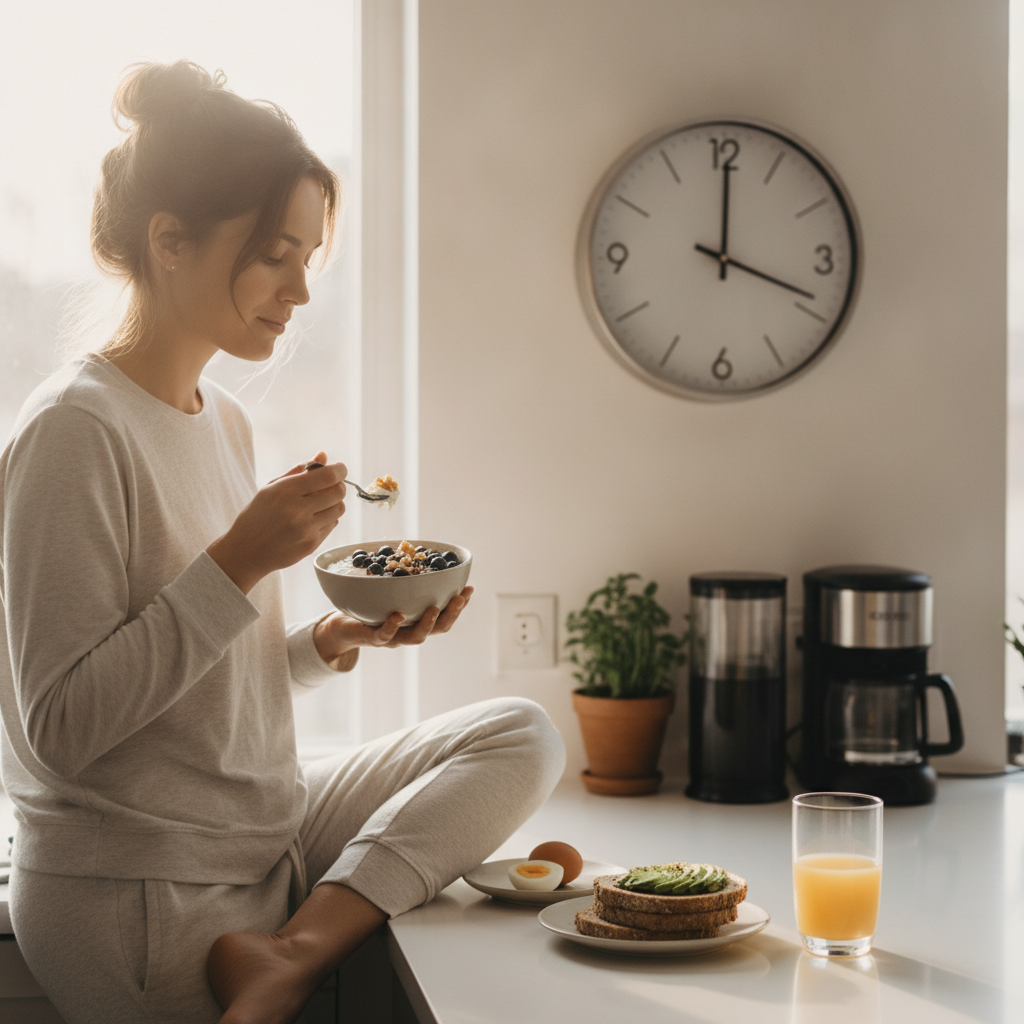
Light is one of the most powerful biological signals the human body receives, and its presence or absence in the hour before sleep directly shapes how quickly the brain crosses into unconscious rest. Unlike noise, temperature, or stress — factors that require active effort to manage — light adjustment is a passive intervention that requires only one deliberate change to the environment. Research into circadian biology has made it increasingly clear that the timing of light exposure, not just the total amount, determines much of the body's readiness for sleep.
How Does Light Affect the Brain's Sleep Timing?
The brain's master clock, located in a region called the suprachiasmatic nucleus, responds to light signals received through the retina by regulating the release of melatonin. This hormone doesn't cause sleep directly — it signals the body that darkness has arrived and that biological processes should begin shifting toward rest. When light continues to enter the eye in the hours before bed, melatonin release is delayed, pushing the sleep window later. Even moderate indoor light levels, well below those of a sunny afternoon, are sufficient to suppress this hormonal transition.
What Makes Blue-Spectrum Light Particularly Disruptive?
Not all wavelengths of light affect melatonin equally. Blue-spectrum light, which is heavily emitted by LED screens, overhead fluorescent fixtures, and most modern smartphone displays, is the most potent suppressor of melatonin production. The photoreceptors responsible for signaling the circadian clock are specifically sensitive to this part of the spectrum. Warm-toned lighting — amber, red, and dim yellow — carries far less of this signal and allows the brain's sleep mechanism to proceed with much less interference. Swapping overhead LED panels for warm-spectrum bulbs, such as those in the 2200–2700 Kelvin range, is one of the most effective adjustments available.
How Does Screen Use in the Evening Compound the Problem?
Digital screens present a layered challenge. Beyond their blue-light output, they also demand cognitive engagement — scrolling social media, reading news alerts, or responding to messages activates neural pathways associated with alertness and reward, not rest. Devices like the iPhone and platforms like Instagram or YouTube create a feedback loop in which the light stimulus and the mental engagement reinforce each other, keeping arousal levels elevated long past when the body would naturally begin winding down. Reducing screen brightness and enabling warm-tone settings, like Night Shift or comparable features on Android devices, partially mitigates the light component but doesn't address the cognitive stimulation.
What Environmental Changes Support Earlier Sleep Onset?
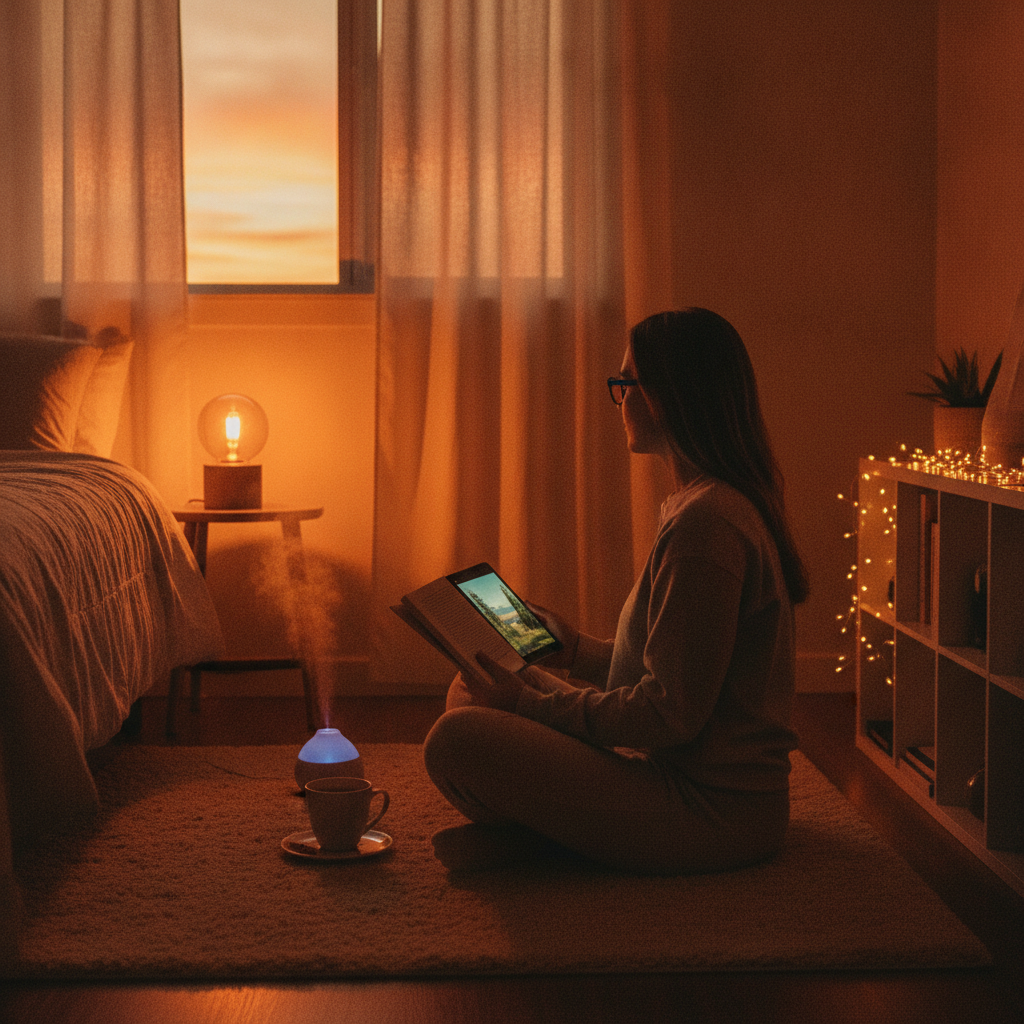
Practical adjustments to the evening environment don't require expensive equipment. Replacing overhead lighting with floor lamps or table lamps fitted with warm-toned bulbs reshapes the room's light quality significantly. Smart lighting systems like those offered by Philips Hue allow automated dimming schedules tied to a target bedtime. Candlelight — real or LED-simulated — provides an extremely low-stimulation light source that many people find naturally calming. The principle across all these options is the same: reducing the intensity and blue-spectrum content of light reaching the eyes as the evening progresses, giving the brain permission to begin its pre-sleep hormonal sequence.
Why Does the One-Hour Window Matter Specifically?
The one-hour threshold isn't arbitrary. Melatonin release typically begins roughly two hours before an individual's habitual sleep time, but the suppression window — the period during which bright or blue-tinted light can meaningfully delay this process — extends up to that final hour before bed. Adjusting the environment at that point catches the melatonin curve before it has been significantly disrupted. Earlier adjustments, say two to three hours before bed, provide even more benefit, but the one-hour mark represents a minimum effective intervention for people who cannot restructure their entire evening. Consistency across nights matters as much as the adjustment itself; the body's clock responds to patterns, not single events.
What Practical Steps Can You Take Tonight?
You don't need to overhaul your home to see results. Start by identifying the brightest light sources in the rooms you use after dinner — overhead ceiling fixtures are usually the main offenders. Switch them off an hour before your intended sleep time and rely on a single warm lamp instead. If screens are unavoidable, use the blue-light filter settings already built into most devices, and position screens lower to reduce direct light entering the upper visual field where the relevant retinal cells are most concentrated. Apps like f.lux, available for computers, automate this color shift based on your local sunset time. A consistent wind-down period in a dim, warm-lit room — even 45 to 60 minutes — trains the brain to associate that environment with the transition into sleep.
The relationship between evening light and sleep onset speed is one of the more straightforward findings in modern sleep science. The body's internal clock is exquisitely sensitive to light signals, and the hour before bed is the window in which those signals carry the most influence over how quickly sleep arrives. Small, deliberate adjustments to light intensity and color temperature remove one of the most common silent barriers to restful nights — not by forcing sleep, but by stopping the environment from working against it.