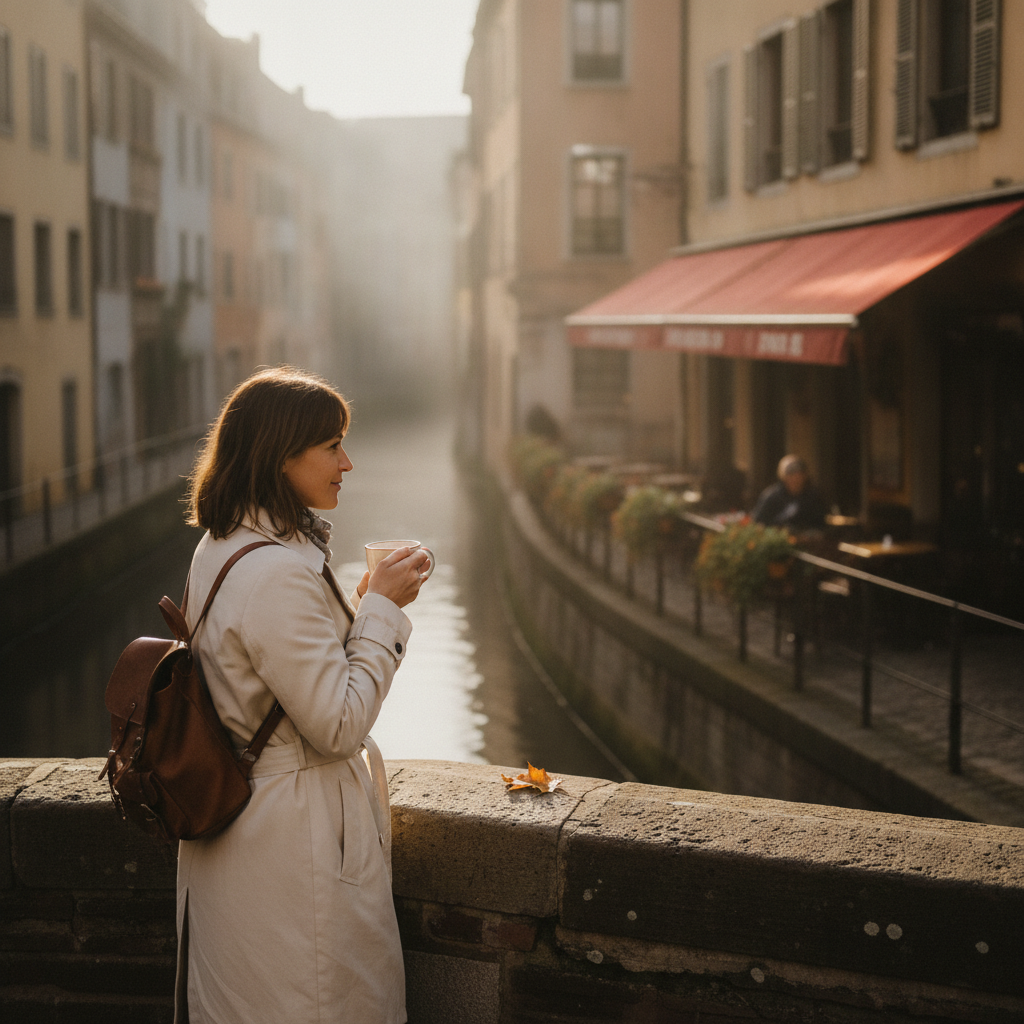
There is a particular kind of restlessness that descends on the last morning of a trip — a low hum of urgency that convinces travellers they have not yet seen enough, done enough, collected enough experiences to justify the journey. It is a feeling so common it has shaped an entire approach to travel: the frantic final sweep, the last-minute museum, the café recommended three days ago finally attempted at 8am with luggage already by the door. And yet, for all the energy spent in this final scramble, what remains in memory is rarely the newest sight. It is almost always the one place that already meant something.
The Psychology of the Farewell Morning
The last day of travel occupies unusual psychological territory. The mind is already beginning the process of transition — sorting experiences, anchoring certain moments, quietly letting others dissolve. Cognitive research on memory consolidation suggests that emotionally significant experiences tend to cluster in the mind around moments of heightened attention, which means the final hours of a trip carry disproportionate weight in how the whole journey will eventually be remembered. A traveller who spends that window chasing novelty is, in a sense, competing against their own emotional architecture. The brain is trying to close something; stuffing it with new data does not help it close — it simply delays the process and muddies what was already clear.
This is one reason the Japanese concept of *ma* — the deliberate, meaningful pause; the space between things that gives them definition — feels so relevant to how final mornings might be better spent. *Ma* is not emptiness; it is a productive stillness that allows what surrounds it to become more legible. Returning to a place already visited carries this quality. There is no pressure to orient, to decode, to decide. The traveller already knows the rhythm of the corner table, the way the light moves across the square by mid-morning, the particular sound the street makes when foot traffic thins. Familiarity becomes the container in which the whole trip can finally settle.
What Returning to a Place Actually Does
Revisiting a favourite spot on a final morning is not repetition — it is deepening. The same café on the Plaça de la Vila in the Gràcia neighbourhood of Barcelona, visited again after four days of wandering, is a different experience than the first visit. The traveller now carries the accumulated texture of the trip: the meal eaten two streets over on the second night, the conversation with the bookshop owner on the third afternoon, the unexpected rain that pushed them into a doorway near the market. All of that arrives with them when they sit down again. The place becomes a kind of vessel, holding everything they have gathered without requiring them to articulate it.
This is something photographers and writers have long understood instinctively — that returning to the same subject with fresh experience produces the more revealing image, the more honest sentence. A single visit produces observation. Return visits produce understanding. And on a final morning, when the traveller's attention is sharp with the awareness that this is the last of something, the quality of perception deepens further still.
The Problem With Last-Minute Sightseeing
The alternative — attempting to visit the Uffizi Gallery in Florence before a midday train, or squeezing in the rooftop temple on the edge of Chiang Mai's old city on the morning of departure — is not without its satisfactions. There is real pleasure in the close call, the thing barely managed. But the emotional register of these experiences is primarily relief, not presence. The traveller is not fully in the Uffizi; they are mentally calculating transit times, rechecking luggage weight, skimming a room that deserves an hour with ten distracted minutes. The memory that forms from this encounter is correspondingly thin — more the shape of the experience than the experience itself.
This quality of distracted attention leaves no room for what the French call *dépaysement* — the productive disorientation of truly being in a foreign place, which only arrives when the mind releases its domestic preoccupations and submits to where it actually is. A final morning spent scrambling cannot produce *dépaysement*; it actively prevents it. The traveller ends their trip not in the place but already in transit, and the destination quietly disappears behind them before they have properly said goodbye to it.
How to Choose the Right Place to Return To
Not every spot visited during a trip qualifies as the one worth returning to on the final morning. The right choice tends to be immediately recognisable in retrospect — it is the place the traveller mentioned unprompted in a message home, the one they found themselves walking past again without quite planning to, the one that produced a specific quality of ease or aliveness or stillness that nowhere else in the trip quite replicated. It might be a restaurant terrace in Lisbon's Mouraria neighbourhood, or a bench in Kyoto's Fushimi Inari that sits just below the main tourist flow, or a particular stretch of canal path in Amsterdam where the light is best in the early hours.
The practical approach is simply to notice, from the first day onwards, where the body naturally relaxes. Not the most impressive sight — the most restful one, in the broadest sense. Rest here does not mean passive; it means the kind of environment where attention feels unforced and the senses expand rather than contract. That quality, once identified, is worth protecting a final morning for.
When that morning arrives, the instruction is simple: go back, go slow, and resist the impulse to document what is already well recorded inside. The point of returning is not to produce a better photograph but to allow the place to complete something. A trip, like most meaningful experiences, needs a moment in which it is allowed to become itself — not still in progress, not yet fully past, but briefly and completely present. That is what a final morning, spent in the right place, reliably provides. The traveller who arrives at the airport having spent the last two hours in exactly the right chair, in exactly the right square, carries the whole journey home with them intact.