Most people accumulate books the way they accumulate everything else — gradually, impulsively, with good intentions and limited follow-through. The shelves fill up over years: a title grabbed at an airport, a recommendation acted on once and forgotten, a set of classics purchased more for how they look than any real plan to read them. The books multiply, the reading does not. What shifts when someone begins treating their personal library not as a repository of things they own, but as a living, breathing collection they actually tend?
The Psychology of the Curated Shelf
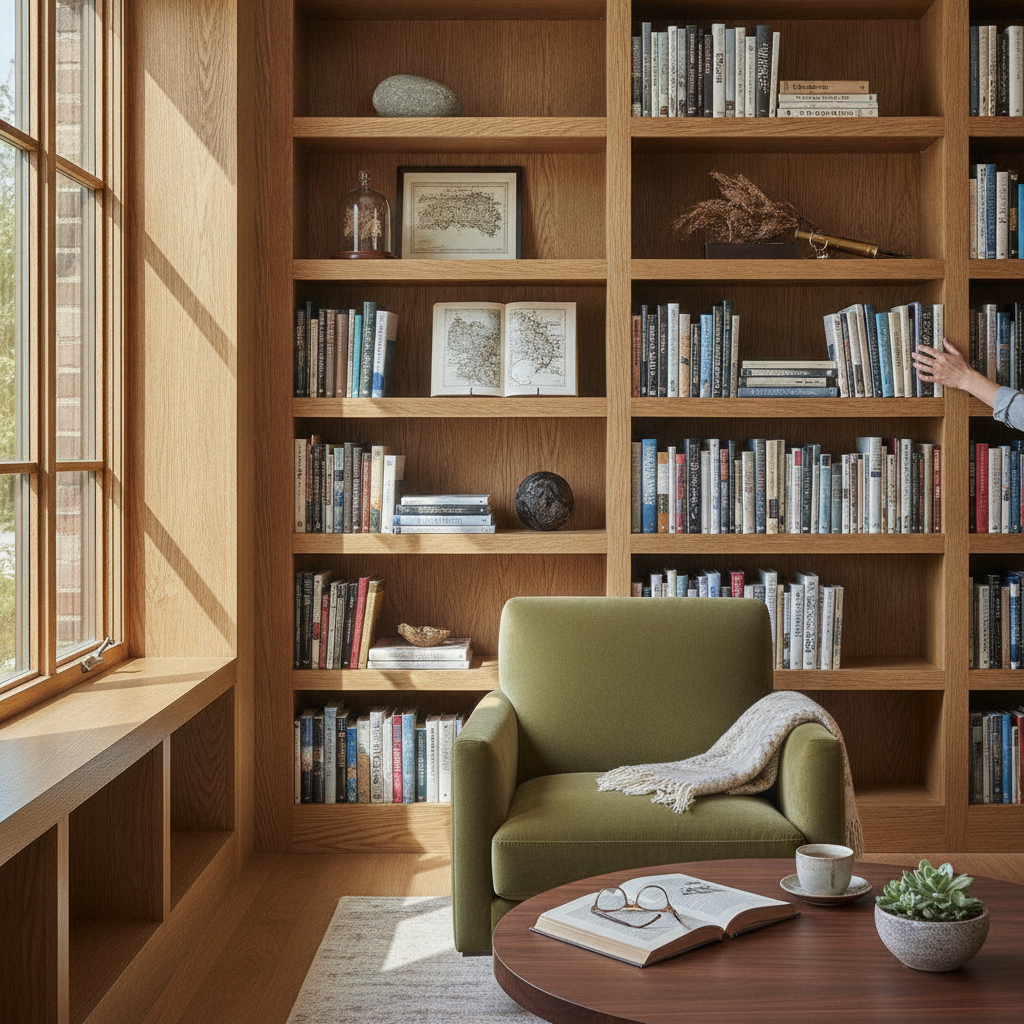
There is a concept in museum practice called *provenance* — the documented history and deliberate selection behind every object on display. A curated exhibition doesn't include everything available; it includes what belongs. When that same philosophy is applied to a home library, something quietly changes in how the reader relates to the books around them. A shelf that contains only titles genuinely valued, actively sought, or meaningfully connected to one's current life creates a different kind of invitation than a shelf serving as a holding zone. The eye moves across it differently. The hand reaches more often. When every book present has earned its place, the collection starts to feel less like furniture and more like a conversation waiting to resume.
This isn't about minimalism for its own sake. Libraries at the Bodleian in Oxford or the Mercantile Library in New York carry thousands of volumes, yet each operates with intentionality — organized, accessible, purposeful. Scale is not the issue. Intention is. A curated library at home can be fifty books or five hundred, so long as the owner can look at any spine and explain, even loosely, why it's there. That clarity of purpose is what transforms browsing into reading.
What Clutter Actually Costs the Reader
A shelf crowded with books the owner has no real relationship with creates what psychologists sometimes call *decision fatigue by environment* — the low-grade mental drain of being surrounded by unfinished choices. Every unread title a person has no genuine intention of reading represents a small, quiet demand on attention. The cumulative weight of those demands is real, even if invisible. People often report that clearing a shelf of books they'd been keeping out of obligation — gifts that never resonated, purchases that seemed like a better idea at the time — produced an unexpected sense of relief, followed soon after by increased reading. The remaining books became more visible, more appealing, more possible.
This is partly why the Japanese concept of *ma* — the deliberate use of negative space to give meaning to what remains — applies so naturally to the home bookshelf. Empty space isn't absence; it's emphasis. A shelf with room to breathe communicates that what's there matters. Practically speaking, it also makes the collection far easier to navigate, which lowers the friction between a free hour and actually opening something.
Curation as an Ongoing Practice
The mistake most readers make is thinking of curation as a one-time event — a single afternoon of sorting, followed by years of gradual re-accumulation. Real curation is more like tending a garden: periodic, attentive, responsive to change. What a person wants to read at thirty-two shifts considerably by forty. Interests deepen in some areas and fade in others. A home library that reflects who someone is now, rather than who they were when they bought most of the books, tends to be far more used. Apps like LibraryThing can help track a collection digitally, which makes it easier to notice patterns — where the gaps are, which subjects have quietly expanded, what might be passed along.
Bookshops like Strand in New York or Powell's in Portland have long modeled this idea at retail scale: the sense that someone with genuine taste has assembled what's on offer. Bringing that sensibility home means periodically asking not just "have I read this?" but "does this still belong here?" Donating, lending, or selling books that no longer fit isn't waste — it's maintenance. It keeps the collection honest.
Reading More by Owning Less
When you walk past a shelf and every book on it is one you genuinely want to read, the mathematics of daily life start to work differently. A ten-minute gap between tasks becomes an opportunity rather than an insufficient amount of time. The friction that usually separates a person from reading — the vague overwhelm of too many choices, the guilt of titles waiting too long, the sense that any choice might be the wrong one — dissolves considerably. The book you're in the middle of doesn't have to compete with forty others for moral urgency. It simply sits there, ready, alongside a few others that feel equally worth the time.
This is what shifts most concretely when a library becomes a collection rather than a catch-all: reading stops feeling like a project and starts feeling like a pleasure again. The books that remain are the ones that earned the right to stay — which means every time you reach for one, you're already reaching for something that genuinely interests you. That small alignment between choice and desire is, in the end, what reading has always required.
The shelves most people have didn't get crowded through any single decision, and they won't become curated through one either. But the shift begins the moment a person looks at their books and asks, honestly, which ones they'd choose again — and which ones have simply been waiting for permission to leave.