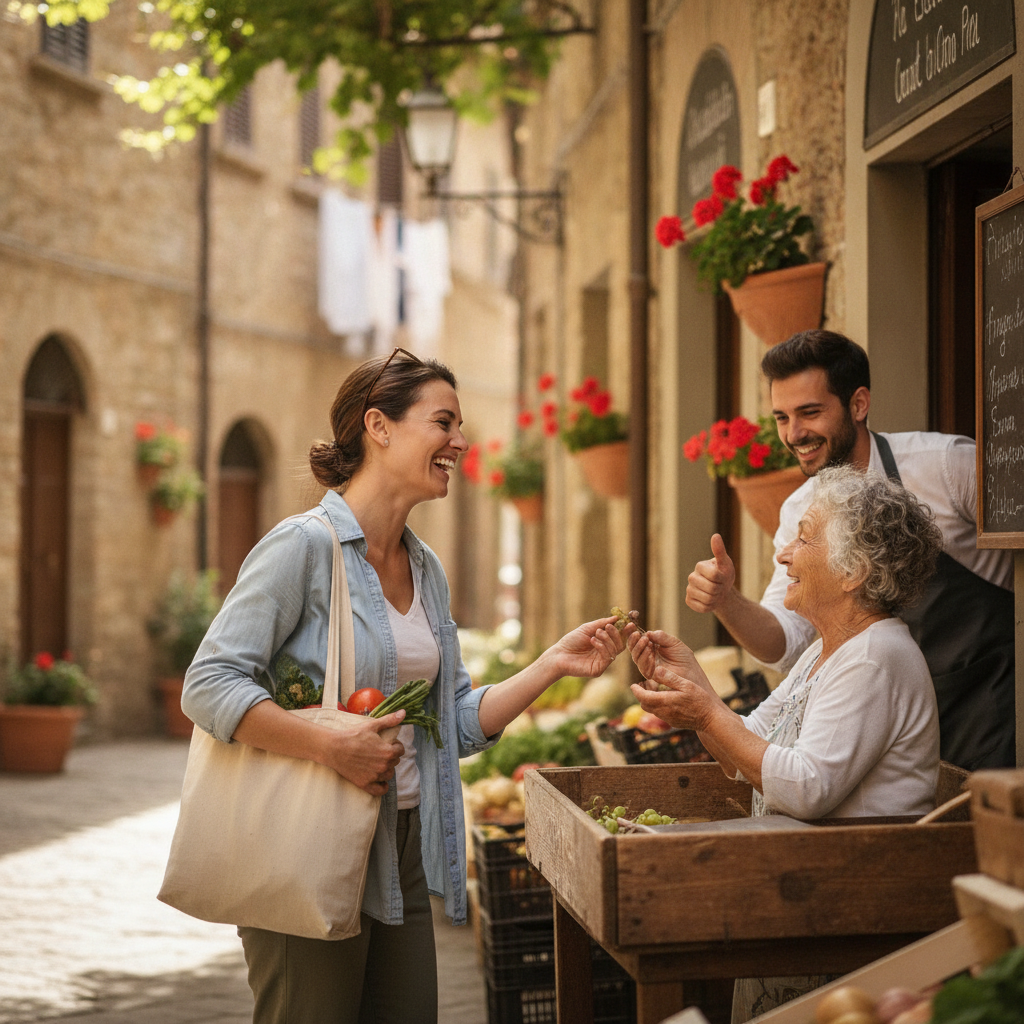
There is a particular moment that seasoned travelers recognize instantly — the moment a local's expression shifts from polite tolerance to genuine warmth. It happens not when a visitor pulls out a phrasebook and stumbles through a rehearsed greeting, but when they say something unexpected: the name of a neighborhood market, a regional dish prepared a specific way, or a colloquial term that signals they have been paying attention. That shift is not accidental. It is the result of language used as a gesture of respect rather than a tool of transaction.
The Difference Between Tourist Language and Human Language
Most travelers arrive equipped with the basics — *bonjour*, *gracias*, *arigatou* — and those courtesies matter. But basic greetings exist in a kind of neutral zone. Locals hear them dozens of times each day from visitors who learned them from an airport app. They are appreciated in the way that holding a door open is appreciated: polite, expected, and largely unremarkable. Hyperlocal phrases operate on an entirely different register. They suggest that a traveler has moved beyond the surface, that they have read something other than a listicle, and that they are interested in a place as it actually exists rather than as it has been packaged for consumption.
What Makes a Phrase Hyperlocal Rather Than Simply Local
A hyperlocal phrase is not simply a regional word for a common object. It is language that reflects the lived texture of a specific community — the way residents in a particular Lisbon *bairro* refer to their neighborhood bakery, the Oaxacan term for the specific market hour when vendors begin to pack up, or the informal Neapolitan expression for paying someone back a small favor. These phrases carry meaning that transcends vocabulary. They encode social customs, historical relationships, and shared understanding. When a visitor uses them correctly, even imperfectly, it communicates something that no translation app can replicate: genuine curiosity about how people actually live.
Why Residents Respond Differently to Specific Local Knowledge
The psychological dynamic at work is straightforward, though its effects are quietly profound. When residents encounter a traveler who knows something specific and unscripted about their place, they stop categorizing that person as a tourist and start treating them as a guest. In many cultures, the guest relationship carries significant weight. In Japanese social culture, there is a concept called *omotenashi* — a form of wholehearted hospitality extended to those who are perceived as genuinely respectful. In Morocco, a traveler who knows the proper way to accept mint tea in a souk, and uses the appropriate phrase of gratitude, often finds that the entire tone of a negotiation or conversation changes. The local is no longer performing for a stranger; they are engaging with someone who has made an effort.
Where to Find Phrases That Go Beyond the Guidebook
The most effective hyperlocal phrases rarely appear in standard travel resources. They surface in neighborhood-specific Facebook groups, Reddit threads dedicated to expat life in specific cities, and the footnotes of long-form travel writing. Apps like Duolingo or Babbel build functional vocabulary but are not designed to teach the informal language of specific communities within a city. A more reliable approach involves reading local journalism in translation, watching regional content creators on YouTube, or reaching out through platforms like Couchsurfing's community forums before a trip even begins. Spending fifteen minutes in a Palermo neighborhood blog before arriving in Sicily will yield more useful phrases than a month of standard language study.
The Five Categories Worth Learning Before Any Trip
Five types of phrases consistently produce the most meaningful shifts in local response. The first is a compliment specific to regional food — not "this is delicious" but the local term for a particular preparation done well. The second is a reference to a neighborhood or district by its informal name rather than its official one. The third involves knowing the local shorthand for a daily rhythm — the word Romans use for the post-lunch quiet hour, or what market vendors in Chiang Mai call the early-morning buying window. The fourth is an expression of gratitude that goes beyond a standard *thank you* — a regional phrase that conveys deeper appreciation. The fifth, and perhaps most powerful, is knowing the name locals use for themselves, particularly in places where outside naming has a fraught history.
The Practical Preparation That Makes This Possible
Learning five hyperlocal phrases before a trip requires roughly the same effort as choosing a restaurant itinerary, which most travelers invest considerable time doing anyway. The preparation begins with identifying the specific neighborhoods or communities where most time will be spent, then searching for audio content — podcasts, interviews, or short documentary clips — featuring residents of those areas speaking naturally. Writing the phrases phonetically and practicing them aloud, even badly, is more useful than memorizing a spelling. Travelers who prepare this way often report that the phrases create openings they didn't anticipate: a vendor who stays to talk, a guesthouse owner who offers an unsolicited local tip, a cafe regular who recommends somewhere not listed anywhere online.
Language as the Quietest Form of Respect
Language is ultimately a form of attention. When you choose to learn how a community speaks to itself — not just how it speaks to visitors — you signal that you see the place as real and layered rather than as a backdrop for your experience. That signal is received. Residents who spend their days navigating the steady flow of tourists develop a finely tuned sense for who is present and who is merely passing through. Five phrases will not make anyone fluent, and they are not intended to. They are intended to open a door that politeness alone cannot unlock. The traveler who arrives knowing the informal name for the old fishermen's quarter in Thessaloniki, or who uses the correct Balinese term when entering a temple compound, is not performing cultural competence — they are practicing it, imperfectly and sincerely, and that sincerity is what ultimately changes the room.
The scene at the beginning of any meaningful journey abroad is always the same: a traveler, slightly disoriented, trying to read the social codes of an unfamiliar place. What separates those who find genuine connection from those who collect pleasant but distant encounters is rarely money or itinerary. It is almost always language — not the language of textbooks, but the language of someone who paid close enough attention to learn how a place speaks when no one is performing for an audience.