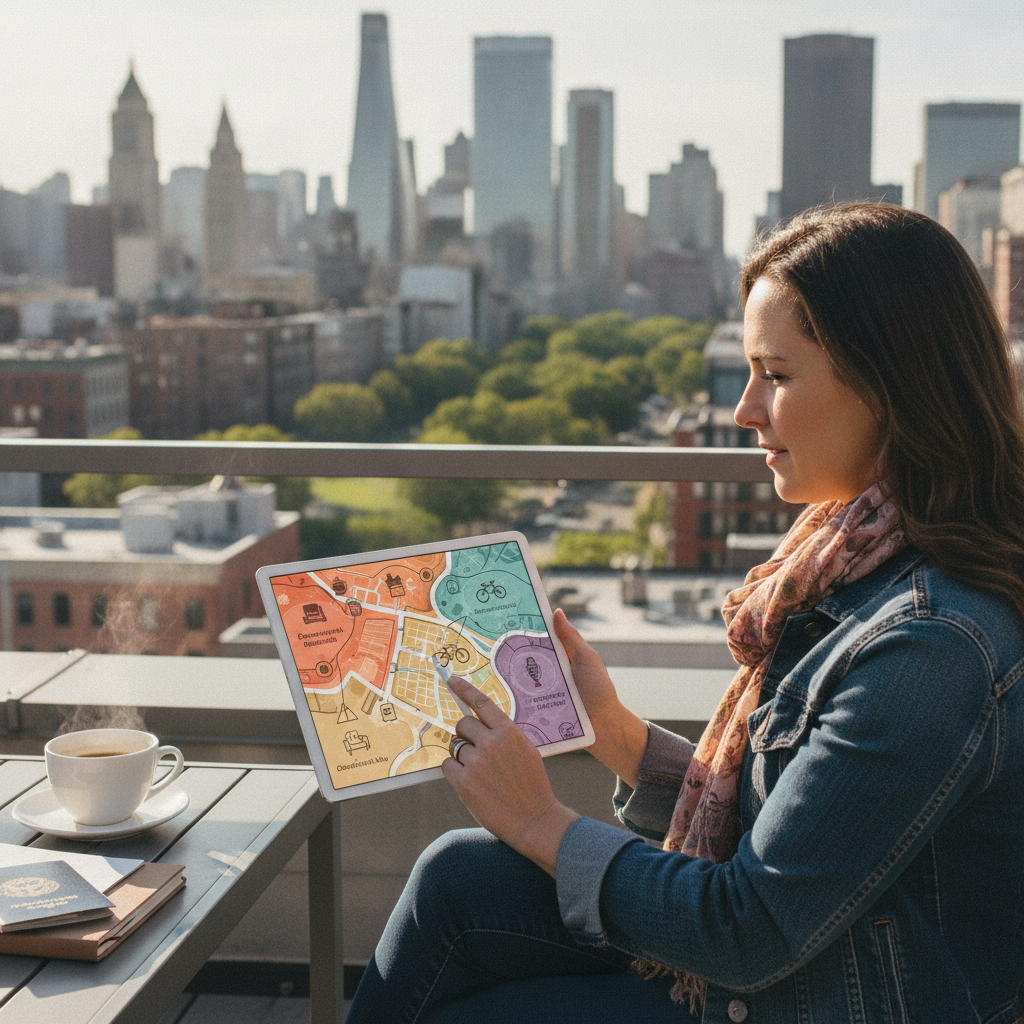
Choosing where to stay in an unfamiliar city is one of those decisions that shapes everything — your morning coffee walk, your commute to the places you want to see, how much energy you spend in transit, and whether the vibe outside your door matches how you actually feel on a trip. Most travelers default to sorting by price or star rating, but that approach misses something more useful: understanding a neighborhood's personality before you commit to sleeping in it.
The good news is that mapping out a city's distinct areas isn't as complicated as it sounds. A few hours of focused research before you book can save you from discovering on day two that you've planted yourself in the wrong part of town for how you like to move.
Read the Neighborhood Profiles on Local City Guides First
Before opening any booking platform, spend time with editorial city guides — publications like Time Out, Condé Nast Traveler, or a city's own tourism bureau site often publish neighborhood-by-neighborhood breakdowns that go beyond "historic" or "trendy." These profiles describe the pace, the resident demographic, the architectural tone, and the kinds of experiences concentrated there. Barcelona's Gràcia feels completely different from the Gothic Quarter even though they're a short walk apart. Reading those distinctions early lets you build a mental map that price filters on Booking.com will never give you.
Match the Neighborhood's Energy to Your Travel Style
Every traveler has a default tempo. Some people want to wake up surrounded by cafés, morning markets, and foot traffic. Others want quiet residential streets and the feeling of actually living somewhere for a few days rather than performing tourism. Before you search accommodations, be honest about which mode you're in for this trip. Staying in Williamsburg in Brooklyn puts you in a neighborhood that rewards night owls and vintage hunters. Staying in Brooklyn Heights gives you quiet, water views, and slower mornings. Neither is wrong — they're just different personalities that suit different traveler states.
Use Google Street View to Take a Virtual Walk Around the Block
Photos on accommodation listings are staged. The bedroom looks clean, the rooftop looks romantic, and the street out front looks perfectly charming. Street View gives you the unfiltered version. Drop into the intersection nearest your potential accommodation and walk a few blocks in each direction. You'll immediately see whether there's a highway overpass two streets away, whether the area feels pedestrian-friendly, and whether the surrounding blocks are filled with the kinds of shops and restaurants that match how you plan to spend your time. This five-minute step filters out a surprising number of poor location choices.
Look for Neighborhoods That Are Adjacent to Your Target Attractions
Staying directly in the most famous district of a city often means paying premium rates to be surrounded by other tourists and souvenir shops. Staying one neighborhood over — close enough to walk or take a short metro ride — usually means lower prices, more authentic surroundings, and easier access to the kind of local life that makes travel feel worthwhile. If you're visiting Paris to spend time around the Marais, consider looking at Oberkampf or République for your accommodation base. You get proximity without the saturation.
Cross-Reference Reddit and Travel Forums for Ground-Level Reality
Official guides are useful but sometimes slow to reflect how neighborhoods actually feel right now. Reddit's city-specific subreddits and forums like Lonely Planet's Thorn Tree are full of recent, candid traveler accounts that describe current conditions, safety impressions, and honest takes on whether a neighborhood lives up to its reputation. Search the city name alongside the neighborhoods you're considering and you'll quickly surface posts from people who stayed there recently. This real-time layer of research fills the gaps that polished editorial content tends to gloss over.
Map the Practical Logistics Alongside the Vibe
A neighborhood can have a wonderful personality and still be logistically difficult for your specific trip. Think about where your flights land, which transit lines serve which areas, and how far you'd need to travel to reach your main itinerary anchors. Tokyo's Shinjuku is convenient for almost everything because of its transport hub status — that practicality matters. A charming, lower-key neighborhood might require a 40-minute transit ride each time you head somewhere central, which compounds across a week-long trip into real friction. Vibe and logistics both deserve a place in your decision.
Build a Simple Neighborhood Shortlist Before You Compare Prices
Rather than searching "cheapest available" across a whole city, try identifying two or three neighborhoods that match your travel personality first, then comparing accommodation options within that filtered geographic scope. This keeps you from accidentally optimizing for price in an area that will make your trip feel off. Apps like Airbnb and Booking.com both allow you to draw or filter by map area, which makes this approach practical. A slightly higher nightly rate in the right neighborhood is almost always worth more than a bargain in the wrong one.
Check How the Neighborhood Feels at Different Times of Day
Some areas transform completely between morning and evening. A district that's sleepy and residential at 9 a.m. might become loud and crowded with bar traffic by midnight. A neighborhood that looks quiet on a Tuesday might have a massive weekend market that blocks streets and changes the entire atmosphere. Travel blogs that focus on daily life — rather than sights — often capture this rhythm best. Looking for posts or videos that show what a neighborhood is like on a weekend morning, a weekday afternoon, and a Saturday night gives you a more complete picture of what you're actually buying into.
As more travelers move toward experience-driven itineraries over checklist-style sightseeing, neighborhood research is likely to become a more central part of the trip planning process. Mapping tools are getting better, local content creators are documenting city micro-cultures with more depth than ever before, and the general appetite for traveling with intentionality rather than convenience is growing. The travelers who make the most of where they go tend to be the ones who thought carefully about where they slept before they ever packed a bag.