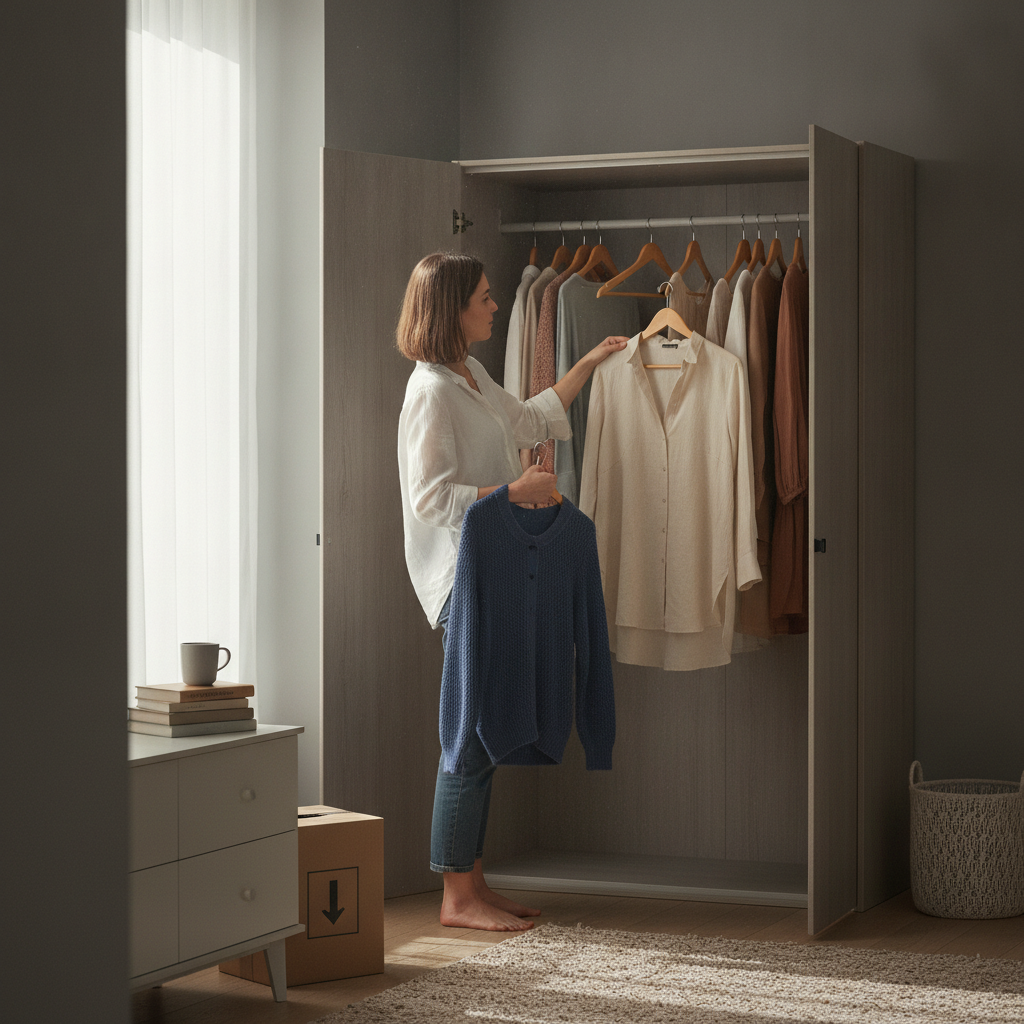
Clutter has a way of building silently. You don't notice it happening — a birthday gift here, a sale purchase there — until one day you open a drawer and feel a quiet but unmistakable tension. That low-grade stress of too much stuff is something a surprising number of people carry around daily without ever naming it. The one-in-one-out rule is a simple behavioral commitment: when something new comes into your home, something existing leaves. No grand decluttering weekends required, no dramatic overhauls. Just a steady, gentle rhythm that keeps accumulation in check before it ever becomes a problem.
Understand Why Accumulation Creates Mental Load
Every object in your home makes a small demand on your attention. Research in environmental psychology consistently points to physical clutter as a background stressor — your brain registers disorder even when you're not consciously focused on it. When possessions multiply without a corresponding exit, that cognitive load compounds quietly. The one-in-one-out rule works partly because it interrupts this accumulation cycle at the source, turning each new purchase or acquisition into a conscious decision rather than a passive addition. Awareness alone begins to shift the pattern.
Start With One High-Traffic Category
Rather than applying the rule across your entire home at once, choose a single category where clutter tends to cluster fastest. For many people, that's clothing — apps like Poshmark or ThredUp make offloading easy. For others, it's books, kitchen gadgets, or children's toys. Starting narrow lets the habit form naturally without feeling overwhelming. Once the one-in-one-out rhythm feels automatic in one area, expanding it to other spaces becomes far less effortful. Small consistency beats ambitious but short-lived attempts every time.
Create a Simple Outgoing Station Near the Door
Having a designated spot for items leaving your home removes friction from the process. A small basket near the entryway — similar in concept to the transition zone idea — gives outgoing items a clear home while they await donation, resale, or recycling. Without this, items you've mentally decided to release tend to drift back into rotation or simply sit in a guilt-inducing pile. Goodwill, local Buy Nothing groups on Facebook, and neighborhood free boxes are all reliable destinations that make the exit step feel meaningful rather than wasteful.
Apply the Rule Before You Purchase, Not After
The most powerful version of this practice happens at the point of acquisition, not afterward. Before buying a new kitchen gadget, ask yourself what currently lives in that drawer and whether you'd genuinely be willing to let it go. This pre-purchase pause does something important: it reframes shopping as a trade rather than an addition. It also surfaces how often purchases are driven by momentary enthusiasm rather than genuine need. Over time, this habit naturally reduces impulse buying, which means less spending and less clutter entering your space in the first place.
Handle Gifts and Free Items With the Same Standard
Free items and well-meaning gifts are among the most common ways the rule gets quietly bypassed. Because they didn't cost money, they can feel exempt — but they still take up physical and mental space. Applying one-in-one-out to gifts doesn't mean rejecting generosity; it means honoring your home's capacity honestly. When a gift arrives that you don't truly need, something else can make room for it. Giving away an older version of something isn't ingratitude — it's a form of intentional stewardship that keeps your environment calm and functional.
Set a Seasonal Review for Slower-Moving Categories
Some categories — books, décor, tools, linens — don't turn over quickly enough for daily one-in-one-out to feel relevant. For these, a light seasonal review works well. Four times a year, spend twenty minutes scanning one category and noting what hasn't been touched. Pairing this with a natural rhythm, like the transition between seasons when storage shifts anyway, makes the habit feel organic rather than forced. The Konmari method and similar organizing frameworks support this kind of periodic, gentle editing as a complement to daily mindful acquisition.
Involve Your Household Without Turning It Into a Project
If you share a home with a partner, children, or roommates, the rule works best when it's introduced as a household norm rather than an individual mandate. Framing it conversationally — "when we bring something new in, we'll pass something along" — tends to land better than presenting it as a system to implement. Children especially adapt quickly when the outgoing step involves choosing which toy goes to another child who might love it. The shared language around it matters; it becomes a household value rather than a chore.
Notice the Stress That Doesn't Happen
One of the subtler rewards of this practice is the absence of a problem rather than a visible result. You stop dreading spring cleaning. The Sunday anxiety of a cluttered home before a busy week quietly fades. Spaces stay manageable with ordinary tidying rather than periodic major efforts. This is exactly how sustainable habits work — they shift the baseline rather than producing dramatic before-and-after moments. When your home holds only what you use and genuinely value, the mental overhead of managing your possessions drops in ways that are hard to measure but easy to feel.
Starting with one rule, applied in one small category, is genuinely enough. The one-in-one-out practice doesn't ask you to become a minimalist or audit your entire life — it simply asks you to keep things in balance, one swap at a time. Pick the drawer or closet that already frustrates you most, and let that be your starting point. The calm that follows a well-edited space is one of those quiet, accessible pleasures that costs nothing and pays off consistently.