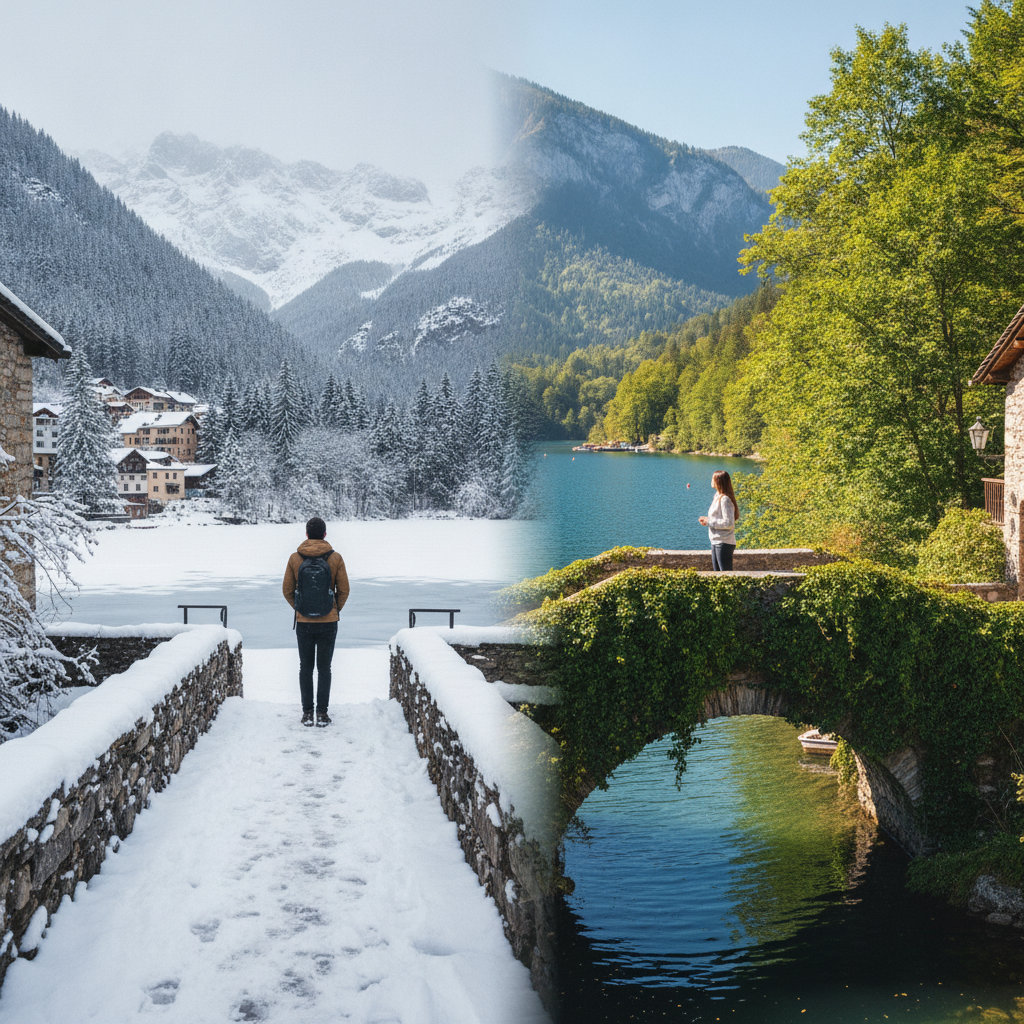
Most travelers move through destinations like readers skimming a book — absorbing the highlights, missing the texture. A single visit, no matter how well planned, captures only one version of a place. The streets look different in winter light. The markets shift with the harvest. The energy changes when the crowds thin or swell. Returning to the same destination in the opposite season doesn't repeat an experience — it completes it.
The Limitation of the One-Time Visit
A destination seen once is a destination seen in costume. Summer Prague fills its bridges with tourists; winter Prague belongs to locals sipping svařák in candlelit wine bars. A beach town in August operates entirely differently than it does in November, when the guesthouses go quiet and the owners finally have time to talk. Single-visit travelers often leave believing they understand a place, when what they've actually experienced is its peak performance — rehearsed, commercialized, and designed for outsiders.
What Seasonal Timing Obscures
Every destination has rhythms that a single-season visitor simply cannot observe. The festivals that only happen in late autumn, the hiking trails that open only after the snowmelt, the neighborhood restaurants that close in summer because locals leave the city — these are invisible unless you arrive at a different time. Seasonal variation isn't a quirk. It's the actual life of a place, cycling through in ways that reveal what the community values and how it functions when no one is performing for an audience.
The Local Relationship That Only Time Creates
Returning to a place sends a signal. Guesthouse owners remember returning guests. The vendor at the Saturday market recognizes a face from two years ago. These small recognitions open doors that novelty never can. When you walk into a café in Tbilisi for the second time — not in the same week, but in a different season, a different year — the dynamic shifts. You're no longer a tourist to be sized up. You're someone who came back, and that distinction carries genuine social weight.
Building Informal Connections Over Time
The relationships that form across two separate visits tend to be more substantive than anything forged in a single trip, no matter how long. A second-time visitor arrives with context — they already know which street floods when it rains, which bakery opens early, which neighborhood feels different after dark. That existing knowledge allows for real conversation rather than orientation. Locals notice when someone has paid attention, and they respond to it with a kind of openness that the first-time traveler, however charming, simply doesn't earn.
Practical Tools for Planning a Return Trip
Organizing a return visit in the opposite season requires more intentional planning than a first trip. Apps like Google Flights and Hopper make it easier to monitor fare patterns across a 12-month window, which helps identify when off-season travel to your chosen destination tends to be most affordable. Booking platforms like Airbnb also allow you to reach out directly to hosts from a previous stay, which can lead to better rates and accommodations you already trust. The logistics are simpler the second time — the mental overhead drops significantly when you already know the airport layout, the transit system, and where to find a decent meal on arrival day.
Timing the Return Strategically
The most revealing opposite-season window isn't necessarily the absolute peak of the opposite extreme. Visiting a destination that baked in July during a February snowstorm is illuminating, but so is arriving in October when summer's crowds have just cleared and autumn color is beginning. The goal is contrast, not punishment. Choosing a season roughly six months removed from your original visit tends to deliver the sharpest difference in atmosphere, pricing, and access to local life — without requiring you to endure conditions that make the trip uncomfortable.
The Cumulative Knowledge That Changes How You Travel
Something shifts after a second visit to the same place. The destination stops being a checked box and starts being a reference point — something you actually know rather than something you've briefly encountered. Travelers who develop this kind of layered familiarity with even two or three places tend to become more discerning everywhere they go. They ask different questions. They notice what's missing from a first impression. They're less easily dazzled by surface-level charm and more attuned to the subtle things that actually define a place's character.
How Depth Changes the Value Equation
Deep familiarity with a handful of places often delivers more lasting satisfaction than a long list of countries visited. The bragging rights of breadth fade quickly; the memory of sitting in a nearly empty piazza in Lecce in November, knowing the town in a way you didn't when you visited in July, stays. There's also a practical financial benefit — return visitors tend to spend more wisely. They skip the overpriced tourist traps they fell for the first time, they know which neighborhoods offer better value for accommodation, and they often find that their second trip costs less while delivering considerably more.
The Season You Almost Didn't Book
Many travelers avoid returning to a place they've already been because it feels like retreating rather than advancing. But that instinct mistakes novelty for depth. The most well-traveled people tend to have a few places they return to repeatedly — not out of habit, but out of genuine curiosity about what they haven't yet seen. A destination in its off-season, stripped of its performance, is often the most honest version of itself. And that honesty, accumulated across two visits in opposite conditions, is closer to actual understanding than a hundred one-time stops ever could be.
The traveler who books a return flight to somewhere they've already been is making a different kind of bet — not on the thrill of the unknown, but on the quiet reward of paying closer attention. Over time, that bet pays out in ways that no first visit, however well-timed or carefully planned, can match.