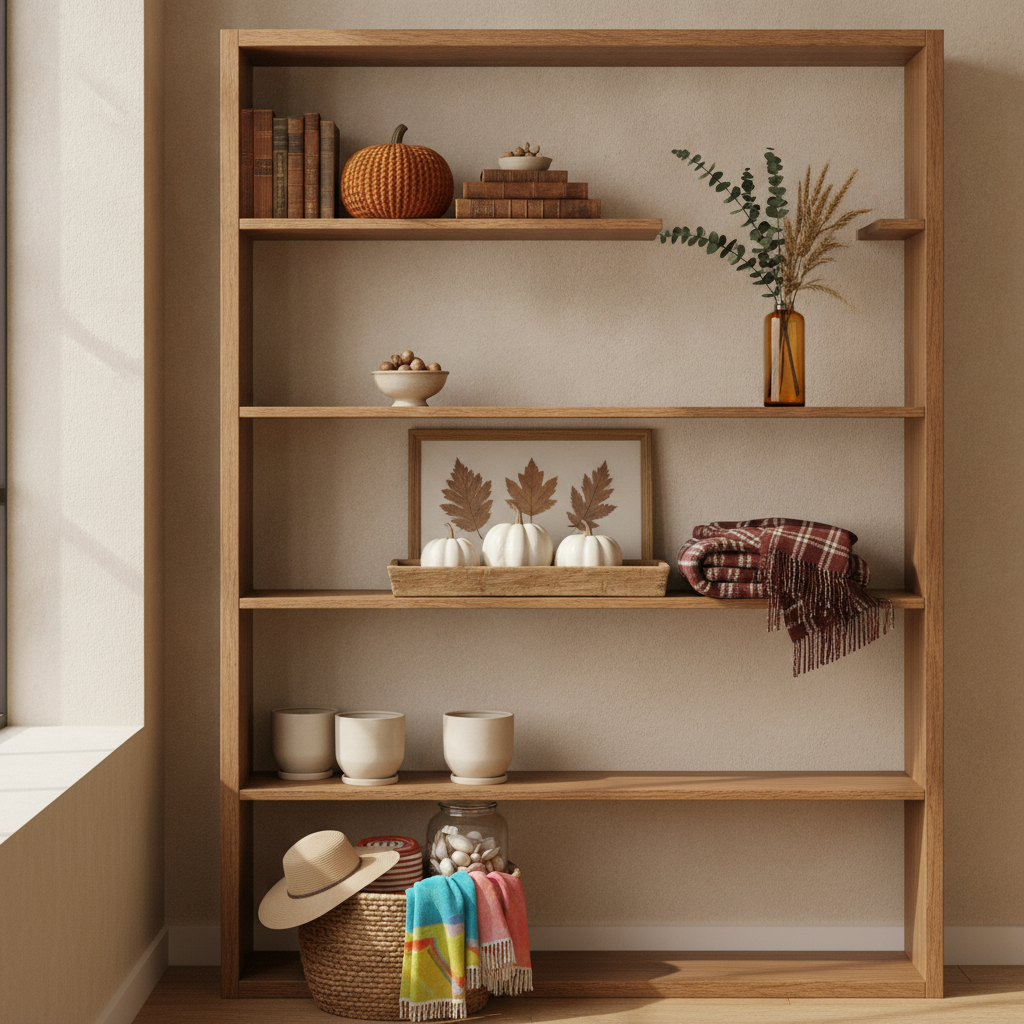
Most people do not have too few possessions — they have too many objects living in permanent, unexamined positions. A ceramic bowl sits in the same cabinet corner for three years, unseen. A small brass lamp gets buried behind newer purchases and slowly disappears from conscious awareness. The objects that surround daily life tend to become invisible not because they are unworthy of attention, but because their constancy removes them from perception entirely. Familiarity, it turns out, is one of the quieter forces working against genuine appreciation.
The Psychology of Object Blindness
There is a well-documented phenomenon in cognitive psychology sometimes called *habituation* — the process by which the brain progressively filters out stimuli that remain constant. Applied to the domestic environment, this means that even beautiful, meaningful, or carefully chosen objects can fade into the background simply because they never move. The ceramics from a trip to Kyoto, the hand-thrown mug from a local market in Oaxaca, the worn linen throw that once felt like a small luxury — all of them can become invisible through sheer repetition. The home stops being a curated environment and becomes a kind of ambient noise. A rotating seasonal shelf interrupts that process directly, reintroducing objects into active awareness by cycling them through visibility and rest in deliberate turns.
The concept is simple in structure. A dedicated surface — a deep windowsill, a low console table, a single open shelf in a hallway or living room — becomes the stage for a small, rotating collection of objects that changes with the seasons or at defined intervals throughout the year. Nothing about the practice requires purchasing anything new. The entire point is to work with what one already has, drawing objects from storage, from other rooms, or from underused corners of the home and giving them a temporary, intentional spotlight. What changes is not the collection but the attention.
Wabi-Sabi and the Art of Temporary Display
Japanese aesthetic philosophy offers one of the most useful frameworks for understanding why temporary arrangement matters. *Wabi-sabi* — the acceptance of transience and imperfection as sources of beauty — suggests that objects gain meaning partly through their relationship with time and change. A ceramic piece displayed in winter, with light falling differently across its glaze, becomes perceptibly different from the same piece seen in summer. The object has not changed; the context has, and that shift in context is enough to restore genuine looking. Similarly, the Scandinavian practice of *hygge* (roughly, the cultivation of coziness and contentment through atmosphere) relies on seasonal adjustment of the home environment — candles, textures, natural materials — as a means of remaining present to domestic life rather than moving through it on autopilot.
A seasonal shelf engages both sensibilities. It asks a person to consider what belongs to a particular time of year — not in a decorative or trend-driven sense, but in a more personal one. What objects carry the feeling of late autumn? Which small items have been stored for so long they've become genuinely surprising to rediscover? The practice functions as a kind of private curation, one that develops a more attentive relationship with the material life of the home over time.
Rediscovery as a Form of Gratitude
There is something quietly powerful about pulling a forgotten object from a cupboard and placing it somewhere it will actually be seen. Interior designers and home organizers who work with clients at studios like The Organized Home in London or spaces influenced by the KonMari methodology often note that the most emotionally resonant moments in their work are not the decluttering but the rediscovery — when a client handles something they'd forgotten they owned and recognizes its value again. That recognition rarely happens when the object is always present. It requires the contrast of absence. A seasonal shelf creates that contrast intentionally, building in periods of visibility and rest that mimic the rhythm of genuine appreciation rather than passive ownership.
This matters beyond aesthetics. The dominant cultural response to dissatisfaction with one's environment is consumption — to buy something new that refreshes the feeling of a space. The seasonal shelf proposes a different mechanism: not acquisition but rotation. The same impulse toward novelty and sensory renewal gets satisfied without adding more objects to an already full home. It is, in that sense, a quietly frugal practice, one that trains the eye to see value in what already exists rather than reaching for what does not.
Building Your Own Seasonal Practice
Beginning is easier than it sounds. Choose a surface that occupies a place in the home where it will genuinely be seen — not a back bedroom or a high shelf, but somewhere in the daily path of movement through the house. Limit the display to five to eight objects at most; restraint is what gives each item room to register. At the start of each new season, spend thirty minutes pulling potential objects from storage, other rooms, or underused spaces. Handle each one. Consider what it holds — a memory, a texture, a color that suits the particular quality of light in that month. Arrange them without overthinking the composition, then let them sit for the duration of the season before rotating again.
Over time, you may find that certain objects always return to the shelf in specific seasons, not by rule but by instinct — a small amber glass bottle that catches low winter light, a piece of driftwood that feels right only in summer. The shelf begins to develop its own quiet logic, one that reflects not trends or design principles but the genuine rhythms of the person who tends it.
Objects that once disappeared into the background of daily life can, with nothing more than a deliberate change of position, become genuinely visible again. That shift — small in effort, significant in effect — is what the seasonal shelf ultimately offers: not a new way of acquiring things, but a new way of actually living with them.