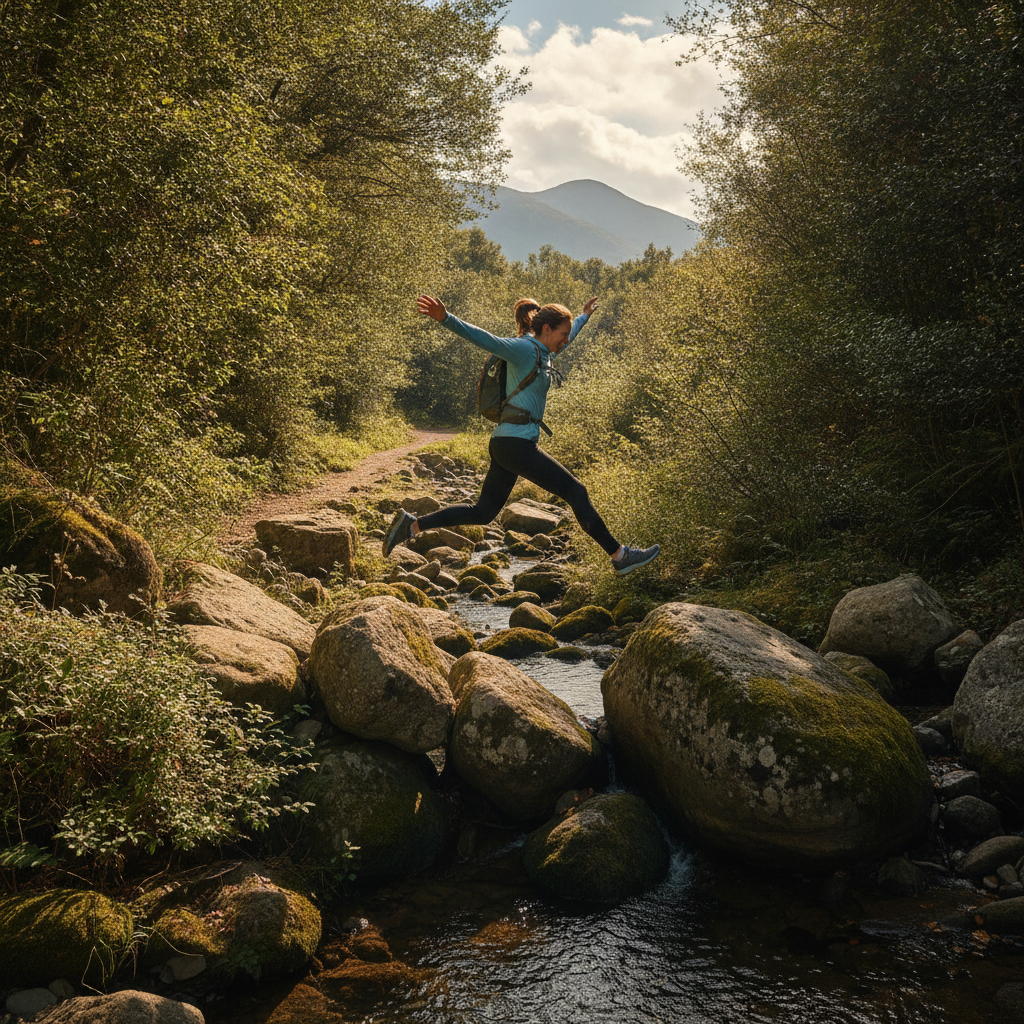
Gym fatigue is real, and it's one of the quieter reasons people abandon fitness routines they once genuinely enjoyed. You start strong, the workouts feel purposeful, and then somewhere around month three or four, the treadmill starts to feel like a chore and the weight room loses its pull. The problem usually isn't a lack of discipline — it's repetition without variation. Swapping just one structured gym session per week for an unstructured outdoor movement activity can change the entire texture of your training week without dismantling what's already working.
Choose Movement That Feels Nothing Like a Workout
The whole point of an unstructured outdoor session is psychological relief as much as physical activity. That means resisting the urge to turn a trail walk into interval training or a beach swim into a measured effort. Think of activities like paddleboarding on a local lake, exploring a new neighborhood on foot, or climbing at an outdoor bouldering wall like those found near Griffith Park in Los Angeles. When movement stops feeling like performance, your nervous system gets a genuine break — and that break is part of what keeps you returning to the gym the following week.
Let Go of Tracking Just for That Day
One session a week without data is not going to derail your progress. Leaving the Garmin at home or turning off the metrics on your Apple Watch for one outdoor session removes a layer of performance pressure that accumulates quietly over time. When every workout is measured, every workout becomes an evaluation. An outdoor movement day works precisely because it sidesteps that mental loop. You move, you enjoy it, and the body still benefits without the psychological weight of hitting specific numbers.
Use Terrain as Natural Resistance Variation
Outdoor environments create unpredictable movement patterns that structured gym sessions can't replicate. A hillside trail, a sandy beach, an uneven coastal path — these surfaces recruit stabilizing muscles in ways that a gym floor simply doesn't demand. Cities like Portland and Bristol are full of parks and riverside paths that offer natural elevation changes perfect for this kind of session. The body adapts to the irregularity without you needing to program anything. Over time, that exposure to varied terrain quietly builds functional strength that transfers back into your structured training.
Protect the Session From Becoming Obligatory
The moment your outdoor movement day starts feeling like something you have to complete, it loses its function. Keep the format loose — no fixed route, no duration minimum, no goal beyond being outside and moving. This is harder than it sounds, especially if you're the kind of person who builds detailed weekly training plans. But treating this session as an open window rather than a box to check is exactly what preserves its restorative quality. Some weeks it's an hour in a botanical garden; other weeks it's forty minutes cycling through a new part of the city.
Rotate the Activity Every Few Weeks
Sticking to the same outdoor activity week after week will eventually recreate the exact monotony you're trying to escape. Rotate through different options every few weeks — kayaking, outdoor yoga in the park, a long exploratory walk in an unfamiliar district, or even a casual game of frisbee with people from a local Meetup group. Variety at this level costs nothing in terms of fitness programming because you're not chasing adaptation — you're simply sustaining enjoyment. And sustained enjoyment is the most underrated driver of long-term exercise consistency.
Connect It to Social Time When Possible
Outdoor movement pairs naturally with social connection in a way that gym training rarely does. A walk with a friend, a group cycle ride organized through Strava clubs, or a casual Saturday morning session at an outdoor fitness space like those in London's Victoria Park all add a relational dimension that purely solo gym work can't offer. The social layer adds intrinsic motivation that doesn't depend on willpower. You show up because someone's expecting you, because the conversation is good, and because the experience is enjoyable beyond the movement itself.
Anchor It to the Same Slot Each Week
Consistency in when you do your outdoor session matters more than consistency in what you do during it. Pick a regular time slot — a Sunday morning, a midweek lunch hour — and protect it the way you'd protect any other training session. Without a fixed anchor, it becomes the first thing to drop when the week gets busy. The irony is that this is the session most worth keeping when things get hectic, because it's the one that resets your relationship with movement rather than just adding to the workload.
The broader direction in fitness culture is moving clearly toward hybrid models — structured training balanced with spontaneous, joyful physical activity. Apps like Strava and Komoot are making it easier to discover routes and find communities built around exactly this kind of unstructured outdoor movement. As the line between fitness and leisure continues to blur, building one weekly outdoor session into your routine now puts you ahead of a shift that more and more coaches are actively recommending. The gym stays, the structure stays — you're just adding enough breathing room to make sure you actually want to keep showing up.