There is a particular kind of exhaustion that comes not from distance traveled, but from destinations collected. The traveler who moves through five cities in seven days returns home with photographs and a faint sense of having missed something — a texture, a smell, a conversation that never quite happened because the bag was always half-packed.
The three-night minimum is not a rule invented by guidebooks. It emerges, almost inevitably, from experience. One night in a place is an arrival. Two nights is orientation. The third night is when something shifts — when the person behind the café counter starts to recognize a face, when the shortcut through the old quarter becomes instinct rather than accident, when the city begins to feel less like a stage set and more like somewhere people actually live.
What Does 'Slow Travel' Actually Change About an Experience?
Slow travel — the practice of spending extended time in fewer places rather than racing through many — has been embraced by long-term travelers for years, but its mechanics are worth examining closely. The first day in any destination is largely administrative: finding the rhythm of public transport, learning which streets lead where, discovering that the hotel map is not entirely accurate. Energy goes into logistics rather than absorption. The second day is when genuine curiosity starts to move through the streets. By the third day, something quieter and more valuable becomes available.
This is when the *passeggiata* happens — the Italian tradition of an unhurried evening walk through town, not toward any destination in particular. It's when the morning market at Naschmarkt in Vienna stops feeling like a tourist attraction and starts feeling like a place where people buy their cheese. The rhythm of a city only becomes legible once the urgency of seeing everything dissolves.
There's a practical dimension here as well. Longer stays tend to reduce costs in ways that rushed travel cannot. Accommodation providers — especially locally owned guesthouses and small apartments — often offer informal discounts for stays beyond two nights. Meals get cheaper when a traveler discovers the lunch spot two blocks from the main square where locals eat, rather than relying on the restaurant that happens to be open at a rushed hour.
How Does Extra Time Reveal What Maps Leave Out?
The places tourists never find are rarely hidden in any dramatic sense. They are simply not visible to someone moving too quickly to notice them. A bakery in Lisbon's Mouraria neighborhood that opens at six in the morning and sells *pastéis de nata* to construction workers and early-shift nurses doesn't appear in any top-ten list. It doesn't need to. Its customers aren't looking for it on their phones.
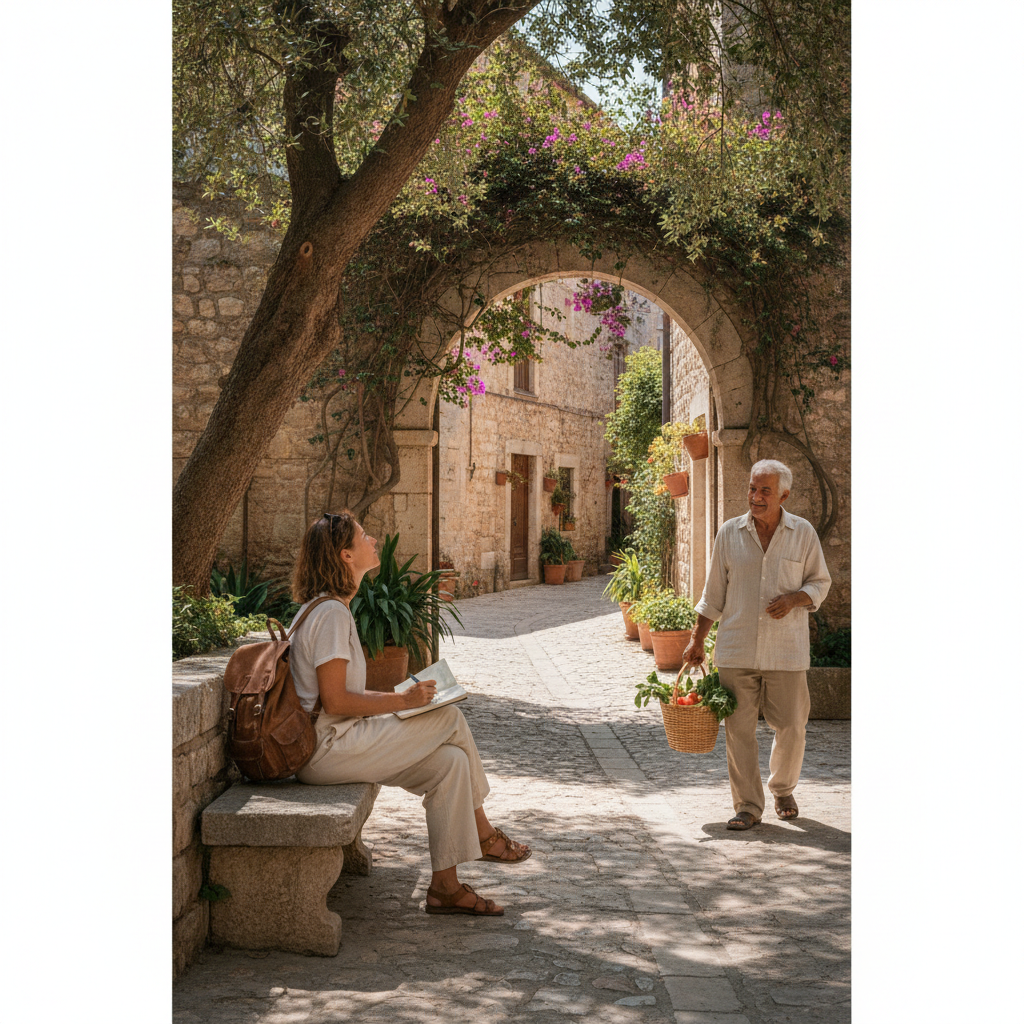
When a traveler stays long enough to establish even the smallest routine — a morning walk, an evening bench, a particular route back from the market — these places begin to surface naturally. A shop owner mentions a ceramics workshop around the corner. A fellow guesthouse guest suggests a trail outside town that takes three hours and ends at a viewpoint with no crowd and no café selling overpriced water. These exchanges don't happen on day one.
The three-night structure creates enough time for the serendipitous overlap between a traveler's curiosity and a place's actual life. It's not about doing less — it's about allowing the destination to do more of the revealing.
Why the Third Night Tends to Be the Most Honest
By the third evening, the performance of tourism tends to quiet down. There is no longer a frantic list of must-sees to tick off before checkout. The person sitting at a table outside a small restaurant in Kotor's old town isn't eating there because it was recommended — they're eating there because they walked past it twice the day before and something about the handwritten menu felt right. That's a different kind of discovery than any app can generate.
This matters because travel, at its most meaningful, is less about what's seen and more about what's understood. A cathedral visited for twenty minutes remains an impressive building. A neighborhood wandered through on three successive mornings starts to carry some weight of real life — the school drop-off, the argument through an open window, the flower seller who packs up exactly at noon.
The slower pace that comes with a minimum-stay discipline also has a subtle effect on memory. Experiences that feel rushed tend to compress into a kind of blur in recollection. Experiences that unfold over time hold their shape longer. The detail that remains years later is almost never the famous landmark — it's the specific quality of afternoon light through a courtyard gate, noticed only because there was enough time to stop and look.
For anyone planning future travel, the shift is simpler than it sounds. Rather than asking which destinations to include, start by asking which ones deserve enough time to actually be known. Choose fewer places. Book the third night before leaving home. Let the itinerary breathe.
The traveler who arrives somewhere without quite knowing how long they'll stay rarely finds what they're looking for. The one who commits to staying long enough to get a little bored — and then a little comfortable — tends to find something they weren't looking for at all, which is usually the better outcome.