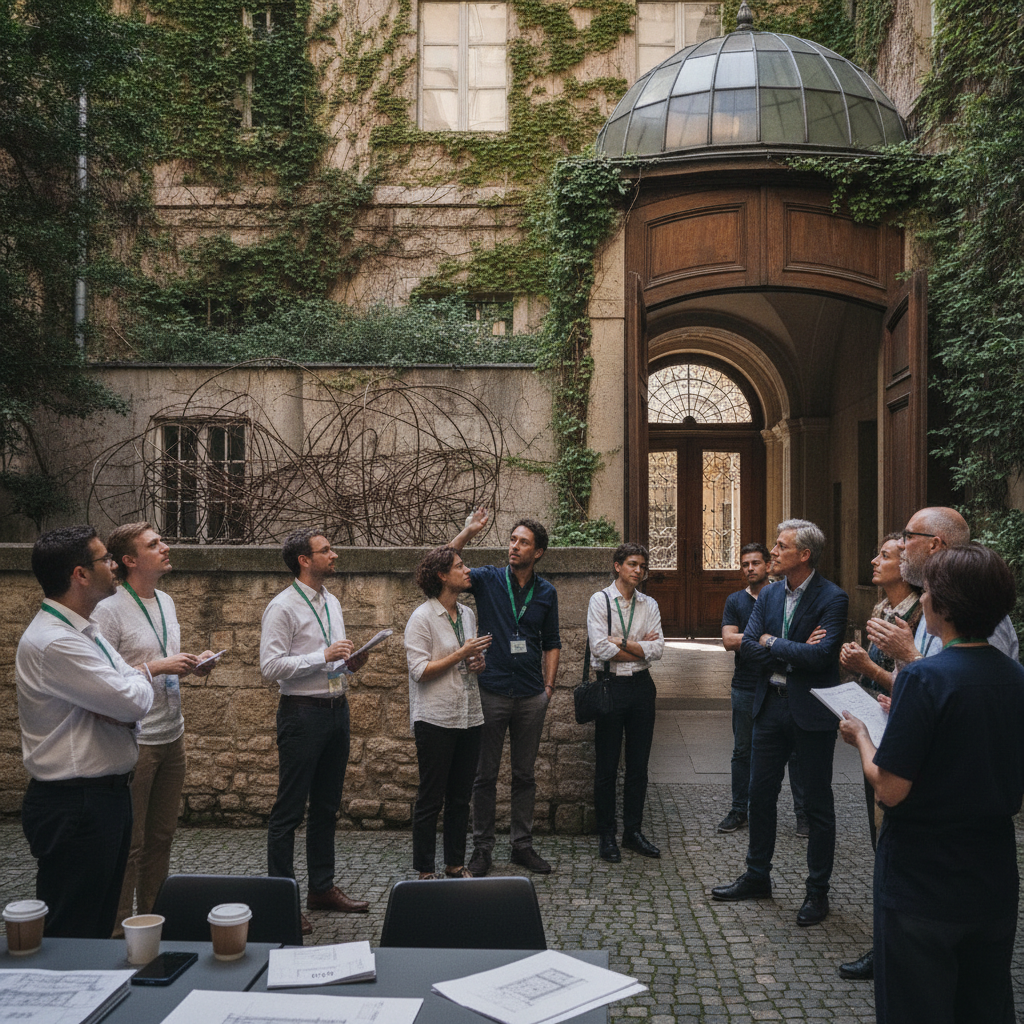
Some of the most compelling travel experiences aren't found on a map — they're found on a calendar. Design and architecture festivals have quietly become one of the most rewarding ways to experience a city at its most alive, offering access to spaces, people, and conversations that remain firmly closed during the rest of the year. For the traveler willing to plan around these events rather than simply show up, the rewards are significant.
The Open-Door Principle Behind Design Festivals
At their core, design and architecture festivals operate on a logic that runs counter to most tourism: they unlock the city rather than package it. During events like Milan's Salone del Mobile or London's Open House Weekend, buildings that typically function as private offices, residences, and studios throw open their doors to anyone curious enough to walk through. What you gain isn't just visual access — it's context. The architects who designed a building, the studios that occupy it, and the craftspeople who built its interiors are often present, willing to talk in ways that no guided tour replicates.
This open-door principle extends well beyond the official program. Satellite events, pop-up exhibitions, and neighborhood installations typically bloom in the days surrounding the main festival, transforming entire districts into informal galleries. You find yourself wandering into conversations that simply don't exist outside this window.
Choosing the Right Festival for How You Travel
Scale and Intensity
Not every design festival suits every traveler. Milan's Fuorisalone, the sprawling satellite program surrounding the Salone del Mobile, runs across the entire city and can feel overwhelming without a strategy. If you prefer depth over breadth, smaller festivals like Dutch Design Week in Eindhoven or the Vienna Design Week offer a more navigable scale — fewer venues, more intimate encounters, and a curatorial focus that rewards slower exploration. Matching the festival's rhythm to your own travel style is the first decision worth making carefully.
Urban vs. Architectural Focus
Some festivals lean toward product design and interiors; others center almost entirely on buildings and urban space. Open House Worldwide, which coordinates simultaneous open-building weekends across dozens of cities, sits firmly in the architectural camp. Its app lets you filter venues by type — industrial, residential, civic — so you can build a day around the spaces that genuinely interest you rather than defaulting to whatever's most promoted. Knowing this distinction before you book shapes a more intentional trip.
Building Your Visit Around the Festival Calendar
The most reliable research starting point is the festival's official website, but two platforms extend your reach considerably. Eventbrite frequently hosts satellite talks, studio tours, and workshop registrations tied to major design festivals, often from organizers who don't have their own ticketing infrastructure. Google Arts & Culture has also expanded its coverage of design events, particularly for the more established festivals, making it a useful place to understand a festival's curatorial themes before you arrive.
Registering for specific events early matters more than most travelers expect. Guided tours of private buildings often release their slots weeks in advance, and the most sought-after venues — a rarely opened modernist house, a working glassblower's studio — fill quickly. Treating the festival's schedule the way you'd treat a restaurant reservation list, rather than something to browse on arrival, changes what you're able to access.
The Neighborhoods That Come Alive During Festival Week
Where to Stay and Why It Matters
During design and architecture festivals, the city's creative geography becomes legible in ways it isn't otherwise. Staying in or adjacent to the festival's primary neighborhoods puts you in the middle of informal activity: studio doors left ajar, conversations spilling onto pavements, designers and architects gathering at the same handful of bars in the evenings. In Milan, the Tortona and Brera districts shift dramatically during Salone week, with makeshift installations appearing in courtyards that are locked and anonymous every other month of the year.
Choosing accommodation in these areas rather than closer to conventional tourist centers isn't just a logistical convenience — it changes the texture of your days. You move through the festival rather than commuting to it.
The Value of Shoulder Hours
Most festival venues experience their heaviest traffic in late mornings and early afternoons. Arriving at venues when they open — often at nine — or returning in the final hour before closing creates a quieter, more personal experience. Guides and building representatives tend to be more conversational during these windows, and the physical experience of being in an extraordinary space without a crowd changes the encounter entirely. This rhythm applies to almost every design festival, regardless of city or scale.
Using Apps and Platforms to Navigate Festival Week
Beyond the festival's own tools, the Spotted by Locals app provides neighborhood-level insight from residents who often document festival-adjacent events that don't appear in official programs. Independent studio open-days, materials fairs, and informal talks frequently circulate through local creative networks rather than centralized listings. Following the festival's hashtag on social platforms in the week before your arrival surfaces real-time additions to the program — venues added late, events shifted outdoors, pop-ups announced with a day's notice.
These informal layers of the festival are often where the most genuinely local conversations happen, precisely because they aren't curated for tourists.
What You Carry Home That No Itinerary Can Guarantee
The practical access that design and architecture festivals provide — the private courtyards, the working studios, the rooftop terraces of civic buildings — is meaningful on its own terms. But the less tangible return is harder to replicate through any other form of travel: a city understood through the eyes of the people who actually build it. Architects explaining why a neighborhood developed the way it did. Designers describing the materials sourced from three streets away. Curators talking about what they hoped a building would feel like before it existed.
These conversations accumulate into a portrait of a city that no guidebook assembles, because no guidebook can be present in the room when they happen. The traveler who plans around a festival's dates doesn't just see more — they understand more, and carry that understanding forward in a way that outlasts the photographs.
As these festivals grow in both ambition and international reach, more cities are developing their own design weeks and open-building programs, which means the opportunities are expanding well beyond the established European circuit. Watching the Open House Worldwide calendar, in particular, is worth doing annually — new cities join regularly, and early adopters of lesser-known editions tend to find the most unhurried and genuinely local versions of exactly this kind of access.