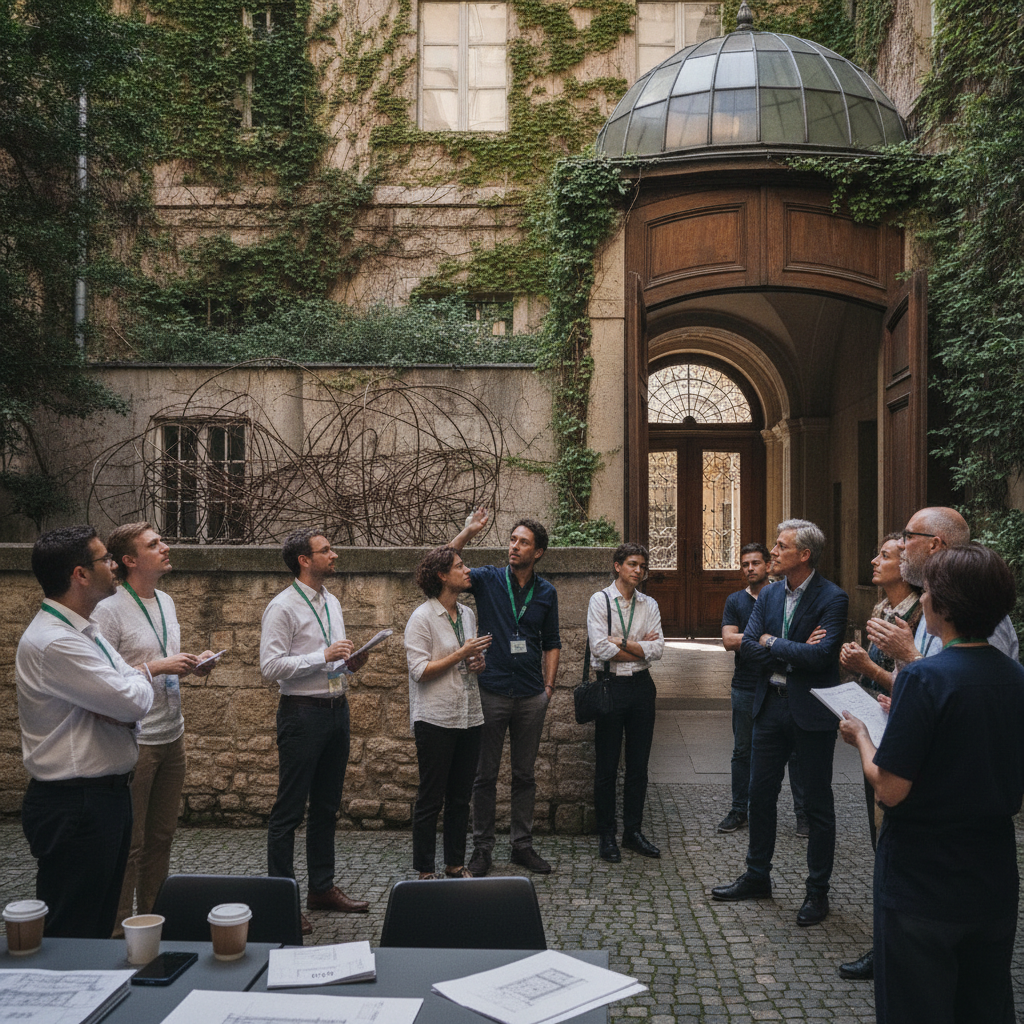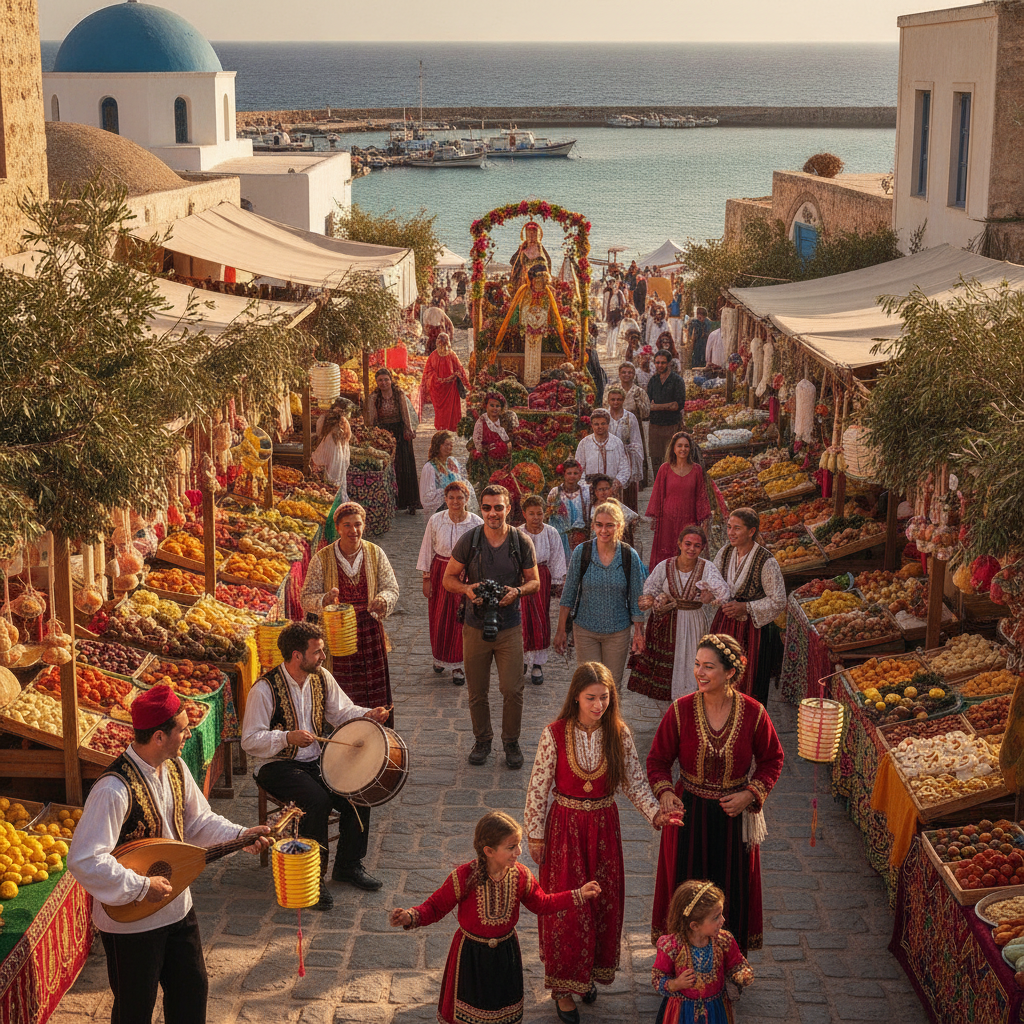
There is a particular kind of stillness that settles over a foreign city on a public holiday — the kind that no guidebook warns you about and no travel itinerary accounts for. The bakery that was open yesterday is shuttered. The usually chaotic street market has given way to something quieter and stranger: families moving through public squares with a purposefulness that has nothing to do with commerce. The traveler who stumbles into this version of a place, unprepared but curious, often walks away with a more vivid and lasting impression than anything a curated tour could offer. Public holidays compress a culture's values, rituals, and social architecture into a single day, and being present for one — even accidentally — is among the most instructive experiences travel can produce.
When a City Belongs to Itself
On any ordinary day, a popular destination performs a version of itself tailored partly to the visitors it expects. Restaurants keep extended hours. Museums maintain predictable schedules. The rhythms of the city are, consciously or not, partially calibrated to outside eyes. A local public holiday dismantles that performance almost entirely. The city reverts to a version of itself that exists for its own residents — their comfort, their traditions, their collective memory. In Oaxaca, Mexico, during Día de Muertos observances, the streets near the Pantéon General cemetery fill not with staged theatrical processions but with families carrying marigolds and candles to tend actual graves of actual relatives. The ritual is intimate in a way that catches unprepared visitors completely off guard, and that intimacy is precisely what makes it irreplaceable.
Different cultures organize their holidays around strikingly different impulses. Some are oriented toward public gathering — parades, civic ceremony, collective noise. Others turn inward, centering family, religious observance, or ancestral remembrance. Japan's Obon festival, observed in mid-August, is a three-day period when the spirits of ancestors are believed to return to the living world. Families return to their home regions, graves are cleaned and tended, and in certain neighborhoods, bon odori — traditional circular dances — take place in temple courtyards with an unhurried quality that has almost no equivalent in Western public life. A traveler present for even part of this sees not Japan's contemporary urban efficiency but something far older and more layered.
The Practical Disruptions That Teach the Most
It would be dishonest to romanticize the experience entirely. Arriving in a city during a local public holiday creates real friction — and that friction, managed with patience, becomes its own form of education. Shops close. Transportation runs on reduced schedules. The restaurant that appeared in every travel recommendation may be locked for the day, its owner celebrating somewhere else entirely. These disruptions force a recalibration. The traveler who planned to spend the morning in a specific museum finds herself instead sitting in a neighborhood park, watching how local families use public space when the workday obligation lifts. She observes what people eat when they cook for celebration rather than convenience, what music carries across balconies, which generations gather together and which move separately.
In South Korea, Chuseok — often described as a harvest thanksgiving — brings the country to a near-complete standstill over several days. Intercity buses and trains fill weeks in advance as urban populations return to ancestral hometowns. The concept of *charye*, the ceremonial offering of food to ancestors, shapes what families cook and how they arrange their time. A foreign visitor in Seoul during Chuseok will find a capital city strangely emptied of its usual density, the normally relentless pace replaced by something slower and more interior. That emptiness, disorienting at first, reveals the degree to which extended family and filial obligation remain organizing forces in Korean life — something no museum exhibit communicates with the same immediacy.
Reading the Holiday as Cultural Text
Every public holiday is, in some sense, an argument a society makes about what it values enough to stop everything for. National independence days argue for historical pride and collective identity. Religious observances argue for spiritual continuity across generations. Agricultural festivals argue for a connection to land and season that industrial life has otherwise severed. When a traveler approaches a local holiday with this interpretive frame — reading it as a text rather than merely navigating it as an inconvenience — the entire experience shifts. The question is no longer "what is closed today" but "what does this day say about the people who live here."
In Bhutan, the Tshechu festival — a religious celebration held annually in dzongs, or fortress-monasteries, across the country — draws both locals and visitors, but the experience is stratified in a meaningful way. Locals arrive in *gho* and *kira*, the traditional dress required at religious sites, and their engagement with the ceremonial masked dances known as *cham* carries weight that tourist observation cannot fully access. The dances are believed to confer blessings on those who witness them sincerely. Understanding even this basic layer of meaning transforms what might otherwise appear as colorful spectacle into something that demands a different kind of attention.
Planning With Intention, Not Just Flexibility
For those who want to build this kind of encounter into their travels deliberately, a few practical habits make the difference. Researching a destination's official public holiday calendar — available through most national tourism boards and cross-referenced on platforms like TripIt or Google Trips — takes less than twenty minutes and can reshape an entire itinerary. The goal is not to plan around holidays but to plan toward them, choosing arrival dates that place at least one local observance within the travel window. Smaller regional holidays, often overlooked by international tourism resources, frequently offer more unguarded encounters than the large national ones that attract their own tourist crowds.
Staying in neighborhoods like Shimokitazawa in Tokyo or the Pigneto district in Rome rather than city centers also increases the likelihood of experiencing holiday life as residents actually live it, rather than as a performance adjacent to the tourist zone. The key is arriving without a full schedule for the holiday itself — leaving time unstructured so that the city's own rhythm can set the pace.
There is something quietly reorienting about being in a place that has, for one day, stopped accommodating you. The city that closes its doors to attend to its own rituals is the same city that opened the scene at the beginning of this piece — unhurried, purposeful, briefly indifferent to outside observation. That indifference, rather than being unwelcoming, is the most honest invitation a destination can offer. The traveler who accepts it, who sits with the unfamiliar rather than working around it, tends to come home with something closer to genuine understanding than any standard itinerary could have provided.