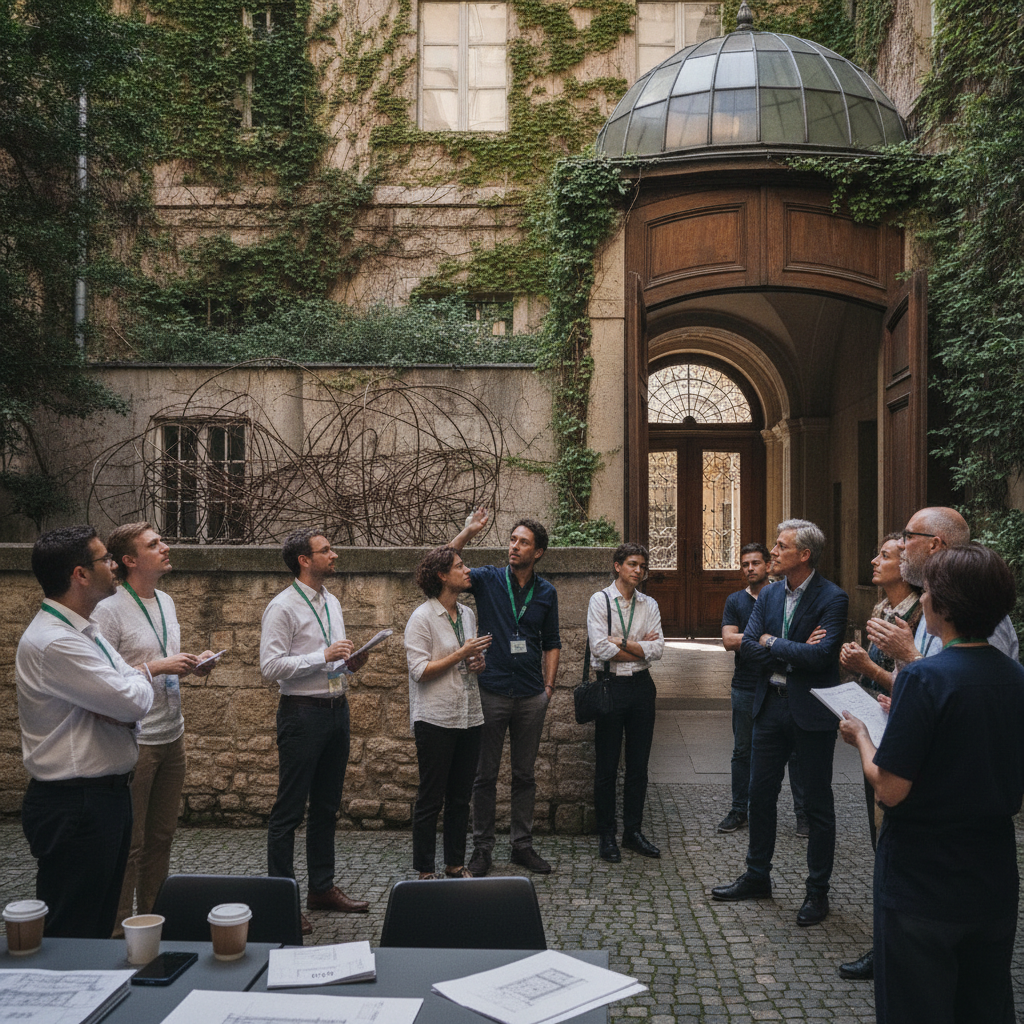
There is a particular kind of exhaustion that strikes seasoned travelers mid-trip — not from walking too far or sleeping too little, but from the relentless forward motion of a fully planned itinerary. Every hour accounted for. Every attraction queued and ticketed. Every meal pre-researched. The journey becomes a checklist, efficient and thorough, and somehow, upon returning home, oddly difficult to remember in any vivid detail.
This is not a paradox unique to anxious planners or first-time tourists. It happens to experienced travelers across every style and budget bracket. The very structure meant to protect the trip from waste ends up flattening the texture of the experience.
The Cost of Total Itinerary Control
When every hour of a trip is pre-assigned, the traveler's relationship to place becomes transactional. You arrive, you receive the experience, you move on. The cathedral in Seville, the afternoon boat in Ha Long Bay, the food tour through Oaxaca's Mercado Benito Juárez — each becomes a station in a sequence rather than a moment allowed to breathe and expand on its own terms. The psychological term for this is *time poverty*, the feeling of perpetual deadline even during leisure, and it operates identically whether the deadline is a work meeting or a 2:00 p.m. museum reservation.
Research into how people form and retain memories consistently points to the role of novelty, emotional engagement, and what might be called *open attention* — the state of mind that arises when nothing is urgently required of you. Fully scheduled itineraries, by their nature, restrict this state. There is always somewhere to be.
What Unscheduled Time Actually Produces
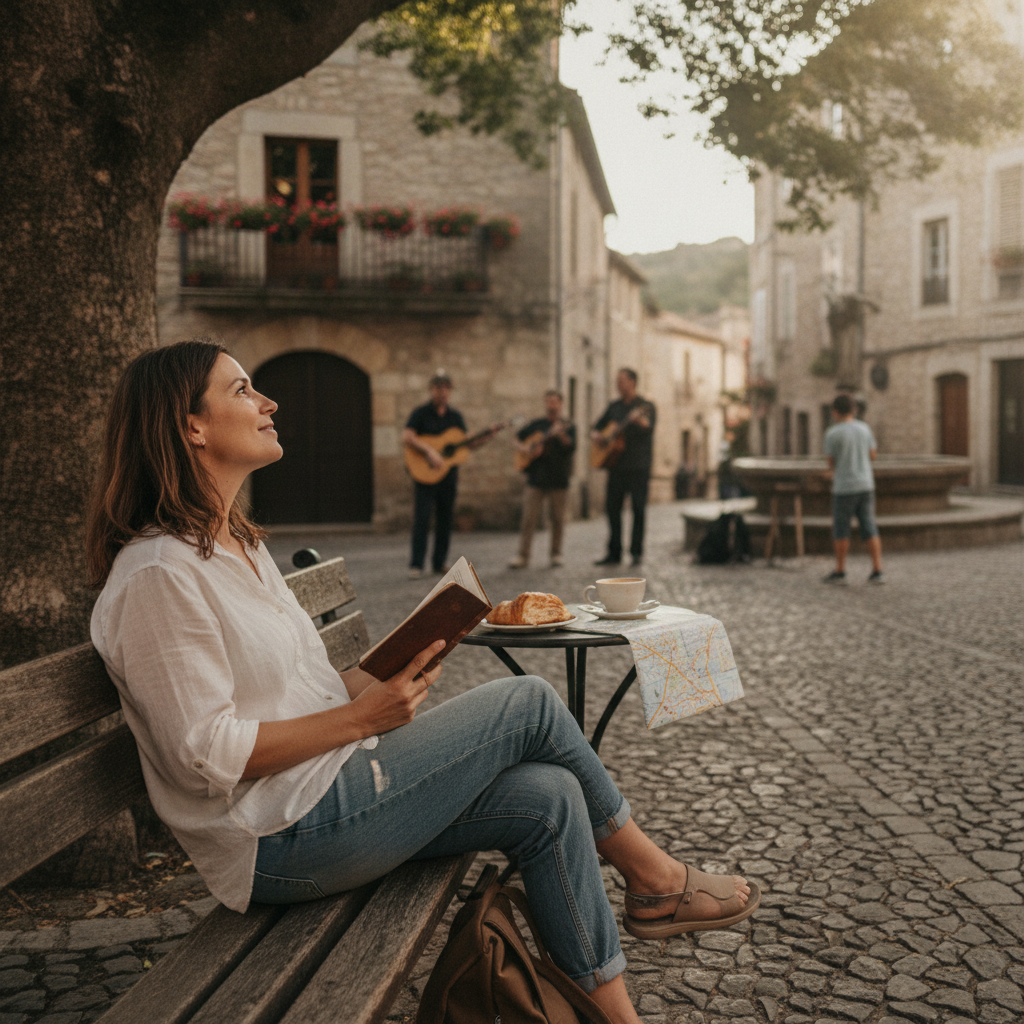
The unscheduled afternoon works because it removes the destination problem. With nowhere specific to be, a traveler begins to notice what is actually in front of them: the way light falls across a particular courtyard at 4 p.m., the small neighborhood bar where locals read the newspaper, the bookshop tucked behind the post office that no travel app has indexed. In Lisbon's Mouraria district, in Kyoto's Nishiki market backstreets, in the residential blocks east of Buenos Aires' Palermo neighborhood — the best discoveries tend to exist in the margins of official tourism, accessible only to those moving without a fixed destination.
This is sometimes described in travel circles as *sérendipité* — the French rendering of serendipity, which carries a slightly more intentional connotation in European travel culture, suggesting a readiness to receive what chance offers rather than passive luck. Planning one deliberately empty afternoon is, in this sense, an act of preparation. You are not abandoning structure; you are building in the conditions under which the most interesting things tend to happen.
The distinction matters. An unscheduled afternoon is not the same as a poorly planned one. It begins with an intention to have no intention — a specific kind of freedom that still benefits from having comfortable walking shoes, a charged phone, some local currency, and a rough sense of which neighborhoods feel safe and interesting to wander.
How Travelers Remember What They Did Not Plan For
Memory research has long established that emotional salience — not duration or expense — determines what a person retains from an experience. A three-hour museum visit to a world-class collection can leave a fainter impression than a spontaneous conversation with a stranger at a café in Porto, or stumbling onto a free outdoor concert in the Trastevere neighborhood of Rome, or finding a narrow market street in Chiang Mai's old city that turned out to sell only handmade paper goods.
These moments share a structure: they were unintended, they required active engagement, and they carried a mild charge of surprise. The traveler had to decide something — to stay or keep walking, to order something unfamiliar, to accept an invitation. That moment of decision, however small, embeds the memory with a personal quality that curated experiences rarely achieve.
The psychological concept of *peak-end rule* — the tendency to judge an experience primarily by its most intense moment and its final impression — suggests that engineering one powerful, unexpected discovery per trip can color the memory of the entire journey. A single remarkable unplanned afternoon can reshape how a person remembers a week.
Making Space Without Losing the Trip
For travelers who plan meticulously, the resistance to unscheduled time is real and understandable. Flights, accommodations, and popular attractions often require advance booking, and the fear of wasting an expensive travel day is not irrational. The practical solution is not to abandon planning but to front-load it. Handle the fixed commitments — the ticketed sites, the dinner reservations, the day trips with departure times — in the first days of a multi-day trip. Reserve one afternoon, ideally mid-trip rather than at the end when fatigue accumulates, as the designated open window.
Apps like Google Maps' Explore feature or Komoot can be useful for identifying walkable neighborhoods without prescribing a route. The goal is orientation, not direction. Know enough to wander safely; know nothing about where you'll end up.
If the idea of pure wandering feels uncomfortable, a loose anchor helps. Choose a general area of the city you haven't visited and give yourself permission to spend however long you like in whatever you find there. That small constraint — a place, but no plan — tends to dissolve the anxiety without reasserting the schedule.
This is the quiet skill that separates travelers who come home with stories from those who come home with photographs. You can plan for almost everything on a trip — but the moments that stay with you longest are almost always the ones you didn't see coming, found in the hours you were wise enough to leave empty.