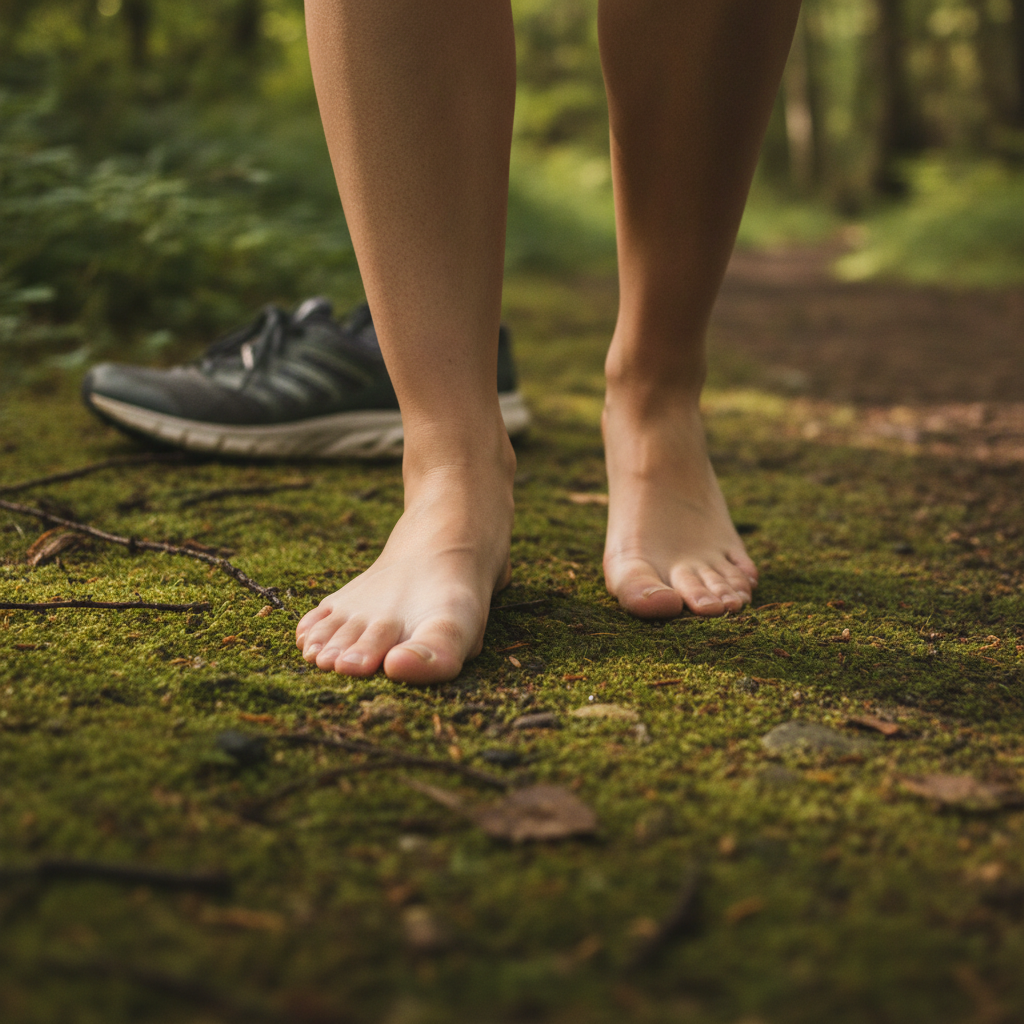
The human foot is one of the most architecturally sophisticated structures in the body, and for most of human history, it operated without the interference of rigid soles, elevated heels, or cushioned midsoles. Modern footwear has resolved many practical problems — protection from harsh terrain, temperature regulation, occupational safety — but it has also introduced a quieter consequence: the gradual weakening and mechanical narrowing of a system designed to flex, sense, grip, and adapt. When feet spend most of their hours encased in supportive structures that do the work for them, the intrinsic muscles, sensory receptors, and connective tissues that once governed every step slowly lose their functional literacy.
The Architecture That Shoes Slowly Silence
The foot contains twenty-six bones, thirty-three joints, and over a hundred muscles, tendons, and ligaments — a structure built for dynamic, responsive movement across variable ground. In conventional footwear, particularly styles with significant arch support and heel elevation, this system is partially bypassed. The arch, which should function as a natural spring, is held artificially high. The toes, which evolved to splay and grip, are often compressed into a narrowed toe box. Over years and decades, the muscles responsible for maintaining arch height and stabilizing the ankle begin to atrophy quietly, not from injury but from chronic underuse. Brands like New Balance and Brooks make technically excellent running shoes, but even well-engineered footwear can contribute to this gradual functional retreat when worn exclusively and all day.
The concept of *proprioception* — the body's internal awareness of its own position and movement in space — is central to understanding what barefoot contact with the earth actually restores. The sole of the foot is dense with mechanoreceptors, sensory nerve endings that detect pressure, texture, and ground angle in real time and relay that information to the postural control systems of the brain. When a thick cushioned sole intervenes between foot and ground, much of this sensory dialogue is muffled. The brain receives a simplified signal. Over time, the postural reflexes that depend on rich foot feedback become less precise, contributing to subtle imbalances that can manifest as knee pain, hip compensation, or chronic lower back tension — conditions rarely attributed to footwear but increasingly linked to it.
Earthing, Grounding, and the Cultural Roots of Barefoot Practice
The practice of deliberate barefoot movement has cultural precedents across many traditions. In Japan, the concept of *hadashi* (bare feet) is embedded in educational culture — many schools require children to spend portions of the day barefoot indoors, a practice long associated with developmental benefits for foot strength and postural alignment. In parts of rural India, walking barefoot on natural surfaces like packed earth or sand is simply daily life, not a wellness practice, and researchers studying these populations have noted measurably different foot arch profiles and gait patterns compared to populations raised in conventional footwear from childhood.
More recently, the Western wellness world has developed its own vocabulary around barefoot practice, including *earthing* or *grounding* — the idea that direct skin contact with natural surfaces, particularly soil and grass, has physiological effects beyond biomechanics. While the more expansive claims around electrical charge exchange remain debated, the biomechanical case for barefoot time on natural surfaces is considerably more straightforward. Grass, packed dirt, sand, and smooth stone all offer varied texture and mild instability that activate the small intrinsic muscles of the foot and ankle in ways that flat, uniform surfaces cannot.
What Gradual Barefoot Exposure Actually Does to Foot Mechanics
The restoration of foot mechanics through barefoot practice is not immediate — it is a process of graduated adaptation that unfolds over weeks and months. When someone accustomed to supportive footwear first begins spending short periods barefoot on natural surfaces, the foot begins to re-engage muscles that have been largely dormant. The arch, no longer artificially supported, must begin generating its own tension. The toes, freed from constriction, begin to splay naturally during the push-off phase of the gait cycle. The ankle, without the lateral stability of a reinforced upper, recruits the peroneal muscles more actively to maintain balance.
This adaptation process carries a meaningful caveat: it must be approached gradually. The Achilles tendon and plantar fascia, accustomed to the reduced demand of cushioned footwear, are vulnerable to overload if barefoot time is increased too quickly. Fifteen to twenty minutes on grass or packed earth is a reasonable starting point, with incremental increases over several weeks. Barefoot-friendly footwear brands like Vivobarefoot and Xero Shoes have built their product lines around the principle of mechanical transition — thin-soled, wide-toed shoes designed to allow the foot to move naturally while providing minimal protection, serving as a middle step for those rebuilding foot strength before transitioning to true barefoot time.
Finding the Right Surfaces and Building a Sustainable Practice
Not all natural surfaces are equal in their effects, and choosing the right ground matters. Grass — particularly the slightly uneven, organically varied kind found in parks like those in Edinburgh's Holyrood Park or along the coastal paths of New Zealand's Abel Tasman — offers gentle proprioceptive stimulation without the abrasive risk of gravel or the instability extremes of deep sand. Packed earth trails provide a firmer challenge that engages the arch more actively. Sandy beaches, while popular for barefoot walking, demand significant calf and Achilles adaptation and are best introduced later in a progressive routine.
For those who want to build barefoot time into daily life without requiring a park visit, a simple grass patch in a backyard, a stretch of garden path, or even an indoor surface like the uneven texture of a natural fiber mat can provide a meaningful starting point. The key is consistency over intensity. Ten minutes of genuine barefoot contact with a natural surface each day delivers more cumulative benefit than a single long barefoot session once a week, because the neurological and muscular adaptations that restore foot mechanics are driven by repeated, low-threshold stimulation rather than occasional effort.
The foot that modern life has quietly simplified is not broken — it is merely undertrained. When you begin to return it, even briefly, to the kind of varied, unmediated contact with the ground that shaped its design over hundreds of thousands of years, it responds with a kind of reawakening. The small muscles find their tension again. The sensory receptors begin transmitting richer signals. The gait, once managed largely by the shoe, begins to be managed by the body itself. What started as a broad, declarative truth about the foot's architectural sophistication resolves, in practice, into something far more personal: the quiet discovery that something you have been walking on your whole life still has much to teach you.