Virtual Reality in Physical Therapy: How Immersive Tech Speeds Recovery
Ruby Singh
2025-12-17
6 min read
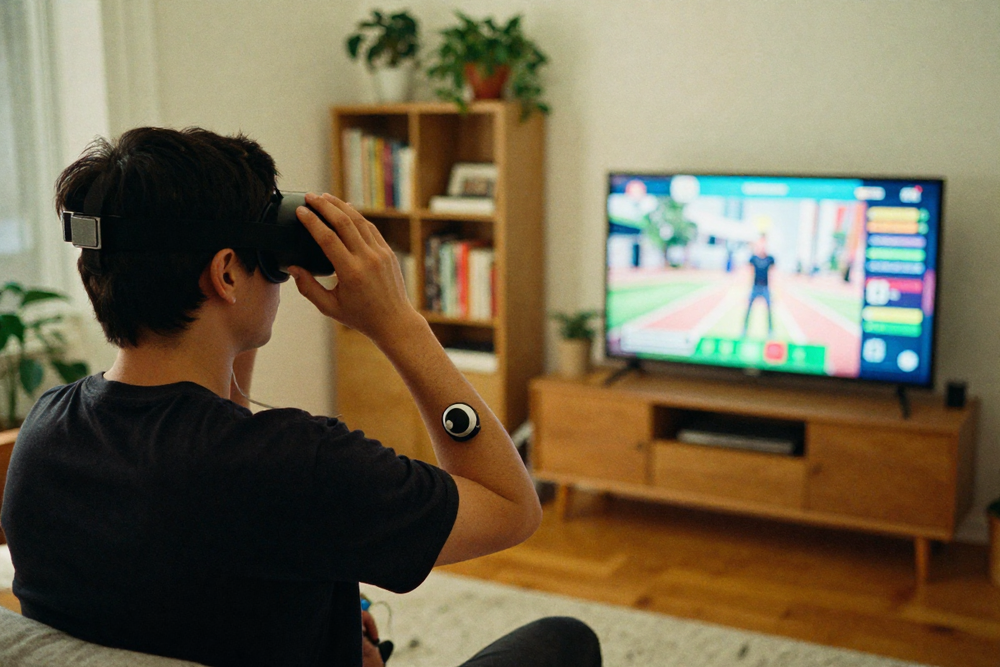
In recent years, virtual reality (VR) has emerged as more than just a gaming or entertainment tool. It is transforming industries ranging from education to healthcare. One of the most exciting applications is in physical therapy, where immersive technology is helping patients recover faster, stay motivated, and achieve better outcomes. By combining engaging digital environments with tailored physical exercises, VR is creating a revolutionary approach to rehabilitation that goes beyond traditional methods.
Physical therapy often requires repetitive movements, strength exercises, and precise motor control. While these activities are essential for recovery, patients frequently report that traditional therapy sessions can feel monotonous or even discouraging. Virtual reality addresses this challenge by turning repetitive exercises into interactive experiences. Patients can now navigate engaging digital landscapes, complete motion-based challenges, and receive real-time feedback, all of which enhance motivation and adherence to therapy plans.
How VR Enhances Engagement in Therapy
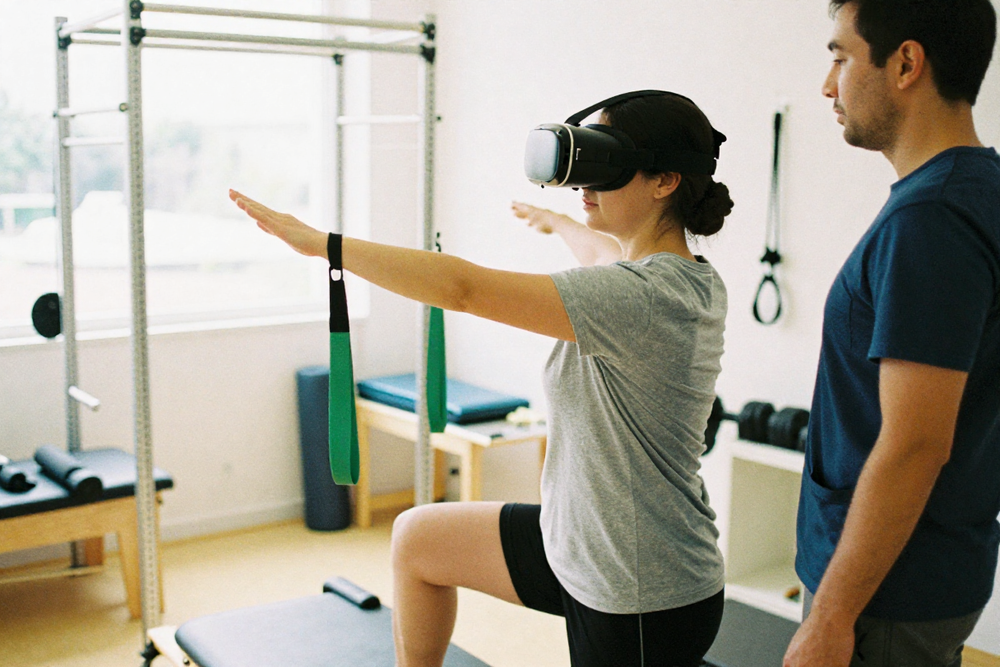
One of the key benefits of VR in physical therapy is its ability to make exercises more enjoyable. Instead of performing standard stretches or lifts, patients can enter virtual worlds where movements are part of a game or adventure. For example, a patient recovering from shoulder surgery might “reach” to pick virtual objects floating in a colorful environment, while someone undergoing lower-body rehabilitation could navigate an obstacle course in a VR simulation.
This level of engagement has a measurable impact on recovery. Studies have shown that patients who participate in VR-enhanced therapy sessions are more likely to complete exercises consistently, leading to faster strength gains and improved mobility. By gamifying rehabilitation, VR transforms what was once a tedious routine into an experience that feels purposeful and even fun.
Real-Time Feedback and Personalized Recovery
Another powerful feature of VR in physical therapy is its capacity to provide real-time feedback. Many VR systems track a patient’s movements with precision, analyzing angles, speed, and range of motion. This data is then displayed immediately, allowing both the therapist and patient to monitor progress and adjust exercises as needed.
Personalization is a critical factor in successful rehabilitation. Every patient’s injury, mobility level, and recovery goals are different, and VR platforms can be programmed to tailor exercises accordingly. For instance, a patient recovering from a knee replacement may have a different set of movement goals than someone regaining shoulder flexibility after a rotator cuff injury. VR technology can adapt the difficulty of exercises, provide visual cues, and even celebrate milestones, which reinforces progress and maintains motivation.
Bridging Physical Therapy and Mental Health
Recovery is not only about physical movement; mental well-being plays a crucial role in the rehabilitation process. Pain, frustration, and boredom can hinder progress, while motivation and confidence improve outcomes. VR addresses this by creating immersive, distraction-based therapy experiences. Patients often report that they are so engaged with the virtual environment that they feel less focus on discomfort, which can lead to longer and more productive therapy sessions.
Furthermore, VR allows therapists to simulate real-world activities in a controlled environment. For example, a patient recovering from a stroke can practice walking down virtual streets, navigating stairs, or reaching for objects in a kitchen setting—all without the risk of real-life accidents. This integration of cognitive and physical training helps patients regain both function and confidence simultaneously.
Remote and At-Home Rehabilitation
One of the most promising aspects of VR in physical therapy is its potential for remote rehabilitation. Patients who cannot travel frequently to a clinic can perform exercises at home using VR systems, while therapists monitor progress through cloud-connected platforms. This approach not only increases accessibility but also encourages consistency in therapy, as patients can complete sessions on their own schedule.
At-home VR therapy also provides detailed analytics. Therapists can track adherence, monitor form, and adjust exercise plans without requiring in-person visits. This data-driven approach ensures that patients receive high-quality care regardless of location and allows healthcare providers to scale their services more effectively.
Success Stories and Clinical Evidence
Numerous studies and clinical trials have demonstrated the benefits of VR in rehabilitation. Research has shown improvements in balance, strength, and range of motion for patients recovering from orthopedic injuries, strokes, and neurological disorders. Patients often report higher levels of engagement and satisfaction compared to traditional therapy methods.
For example, stroke survivors using VR to practice upper-limb movements regained functionality faster than those following conventional exercises. Similarly, orthopedic patients recovering from knee or hip surgery showed improved adherence to exercise regimens when VR was incorporated, ultimately leading to quicker return to mobility.
Challenges and Considerations
While VR is promising, there are challenges to consider. Equipment cost, access to technology, and the need for therapist training can limit adoption in some clinics. Additionally, VR may not be suitable for patients with severe motion sickness, epilepsy, or certain cognitive impairments. However, as technology becomes more affordable and adaptable, these barriers are gradually being addressed.
It is also essential to view VR as a complement to, rather than a replacement for, traditional therapy. Human oversight, hands-on guidance, and clinical expertise remain crucial for ensuring safe and effective recovery. VR’s role is to enhance engagement, provide personalized feedback, and support consistent exercise habits.
The Future of VR in Physical Therapy
Looking ahead, the integration of virtual reality into physical therapy is expected to expand even further. Advancements in haptic feedback, motion tracking, and AI-driven analytics will create even more immersive and adaptive rehabilitation experiences. We can anticipate a future where VR therapy is seamlessly integrated into standard care protocols, making rehabilitation more efficient, engaging, and widely accessible.
VR stands out as a tool that not only improves physical outcomes but also enhances the patient experience. By turning rehabilitation into an interactive and motivating process, virtual reality is reshaping the way patients recover, therapists deliver care, and the field of physical therapy evolves.
Virtual reality in physical therapy represents a major shift in rehabilitation. By combining immersive experiences, real-time feedback, personalized exercises, and remote accessibility, VR is helping patients recover faster, stay motivated, and regain confidence. For anyone undergoing physical therapy, embracing this technology could be the difference between a slow, frustrating recovery and an engaging, efficient, and successful journey back to full mobility.
More Trending Articles

Digital Health Communities: Using Technology to Connect and Support Healthy Lifestyles
Elijah Brooks
2026-02-07